
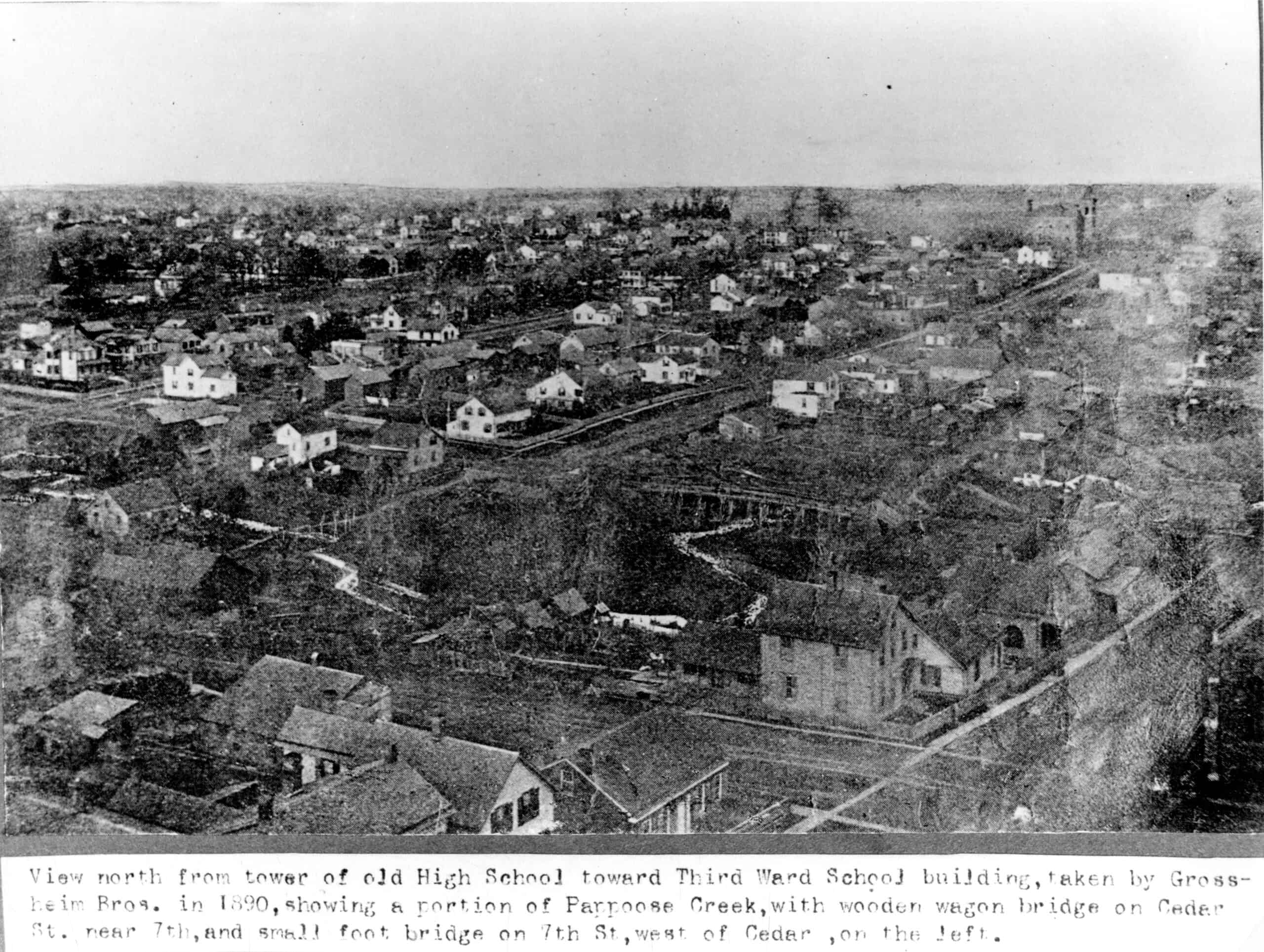
View north from tower of old High School toward 3rd Ward School building, taken by Grossheim Bros. in 1890, showing a portion of Pappoose Creek, with wooden wagon bridge on Cedar St. near 7th and small foot bridge on 7th, west of Cedar, on the left.

Hershey's Lower Mill, formerly Burdick's Mill, the building of which was begun in the summer of 1876 by E.W. Coleman and Co., finished and started in operation in July, 1877 by E.L. Roberts and Co., succeeded the next year by E.E. Burdick and Co., and was purchased Jan. 25 1881 by the Hershey Lumber Co., who operated it until 1895 and sold it to Kaiser Brothers. From a photo taken in the early 1890s, when owned by the Hershey Lumber Co. with a daily capacity of 150,000 feet of lumber.

Scene at Drury's Landing in 1866, 3 miles above Muscatine on the Illinois side of the river, just above the head of the Big or 4th Slough. It was then declining in population, and all buildings on the site have since disappeared. From a photograph by J.G. Evans, from the desk of the ferry "Decalion" on one of her trips to that point during a high stage of water.

South side of Second St., East of Iowa Avenue in 1866. Muscatine National Bank, J.B. Dougherty Sr., president, in front of it. Next, C.W. Draper's grocery (formerly Stocker and Draper). In row of frames, Hess and Giesler, harness, Aumueller and Daiber, shoes, G. Fryermuth, J.W. Koehler, Jacob Braunwarth, show shop, and J.P. Lewis and Son, tailor shop, next to J.G. Gordon and Co's 3 story brick. Beyond, Dougherty's drug store and Schaefer's Brewery wagon on right. Photo by J.G. Evans.

West Front St. early in 1866, enlarged from stereoscopic view taken by J.G. Evans from the ice on the river. Freight house of M. and M.R.R. on the left foot of Locust St. Planning Mill was built by Stein and Hill in 1852. After Col. S.G. Hill was killed at the battle of Nashville, S.G. Stein became owner Feb. 12, 1864, and sold to Cadle and Mulford Aug. 13, 1866. They moved machinery to new factory at mouth of Pappoose Creek. Residence on top of hill to the right was L. Scott Richman's afterward Richard Musser's. Pliny Fay's on on brow of hill to the left.

Northern Line Steamer "Minnesota" at the levee in 1866. Stein's lumber raft and small steamer "Lily" in foreground. In 1874 the "Lily", then owned by Capt. Joseph Phelps, was sold to parties in Iowa City. After trying in vain to reach Iowa City via the Iowa river, the "Lily" returned to Muscatine and was shipped on two flat cars to Iowa City, and launched in the Iowa River. Four years later, the "Lily" ascended the Cedar to Cedar Rapids.

Second St. East of Cedar in 1866. Lyman Day and Son on the corner, T.I. Van Buren's photograph gallery and Thomas' dental office about. Then G.W. Wilmering, grocery, and Graham Bros. (I.L. and James E.) drugs. Wm. C. Clapp stoved in two story frame, then J.S. Gralock (formerly S.M. McKibben and Co), lumber yard, Jacob Nollert's barber shop (later Urmston's clock shop), and the Eichelberger House. On the right, Speer and Munroe's Hawkeye Drug Store, Masonic Hall with ox team in front of it. Foster block, Skinle's barn, photo by J.G. Evans.

Third Street, East from Iowa Avenue in the winter of 1866-7. Nevada Mill on the right. Vacant lot on the left corner (where the M.E. Church was built in 1868.) with ruins of Worsham and Phelps' livery stable, which was set on fire by the explosion of the Nevada Mill's boiler on Oct. 1 1864. Pappoose bridge in the distance. Enlarged from an original negative taken by J.G. Evans.
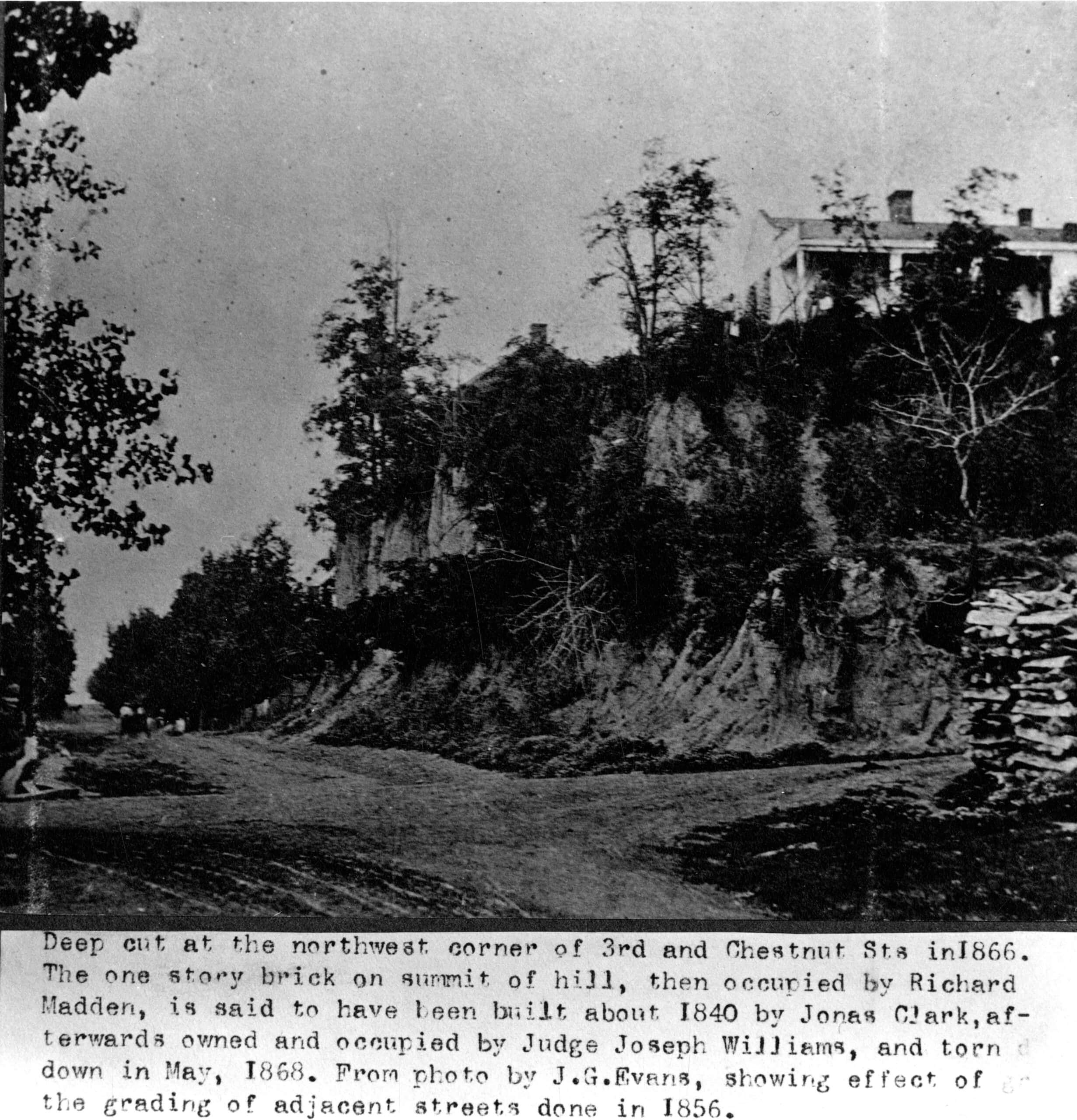
Deep cut at the northwest corner of 3rd and Chestnut Sts in 1866. The one story brick on the summit of hill, then occupied by Richard Madden, is said to have been built about 1840 by Jonas Clark, afterwards owned and occupied by Judge Joseph Williams, and town down in May, 1868. From photo by J.G. Evans, showing effect of the grading of adjacent streets done in 1856.

Celebration, July 4th, 1866 by the Mechanics Aid Society. Procession is moving West on Eighth St. toward the grove, then lovated North of Eighth St., and West of St. Matthias Church. From a photo by J.G. Evans, looking East from near Linn Street.

St. Mattias Catholic Church, 2nd building, erected in 1856 on 8th St, between Chestnut and Pine. From photo by J.G. Evans in the '60s, previous to any additions, the clock tower and chimes having been added in 1880. Torn down in 1910 as a site for new edifice. Rev. P. Laurent had charge of the above church and also of the first church for a period of 50 years, beginning in 1851.

Blacksmith shop which was run by John Mackey from 1864 to 1877, then for two years by Mackey and Fahey, and started in 1858 by Patrick Mackey and Son. It stood on the north side of 3rd St. west of the Iowa Avenue corner, where the west branch of Pappoose Creek entered the culvert, the latter covered by a screen of 2 by 10 inch boards to keep out debris during a freshet. Across the creek stood Stockdale and Curren's shop built in 1845 by Harvey Gillett as a grain warehouse, also used as such by John Lemp previous to the civil war, and torn down in 1879. In rear, on left, was Rothschild's grain warehouse. All occupied the present site of the Public Library. Above is from sketch by Phil J. Mackey of blacksmith shop as it appeared from 1865 to 1870. Henry Madden's carpenter shop above.

Excursion on the "City of Keithsburg" to Rock Island Arsenal by M.E. Sunday School, July 4th, 1867. From an old negative by J.G. Evans.

West 3rd Street, looking east from near the summit of West Hill, between Cherry Street and Broadway, showing its appearance about the year 1866. From stereoscopic view taken by J.G. Evans.
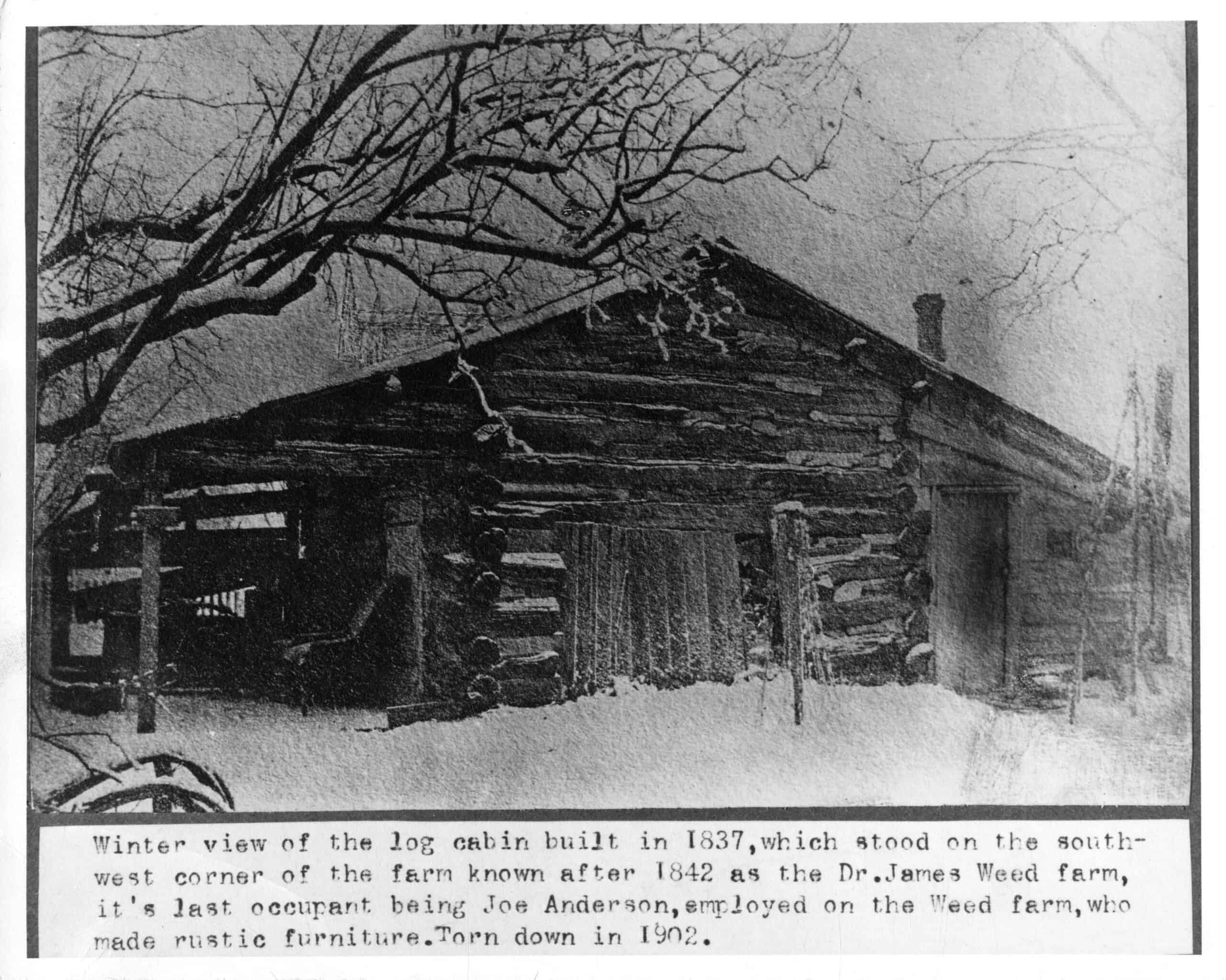
Winter view of the log cabin built in 1837, which stood on the southwest corner of the farm known after 1842 as the Dr. James Weed farm, who made rustic furniture. Torn down in 1902.
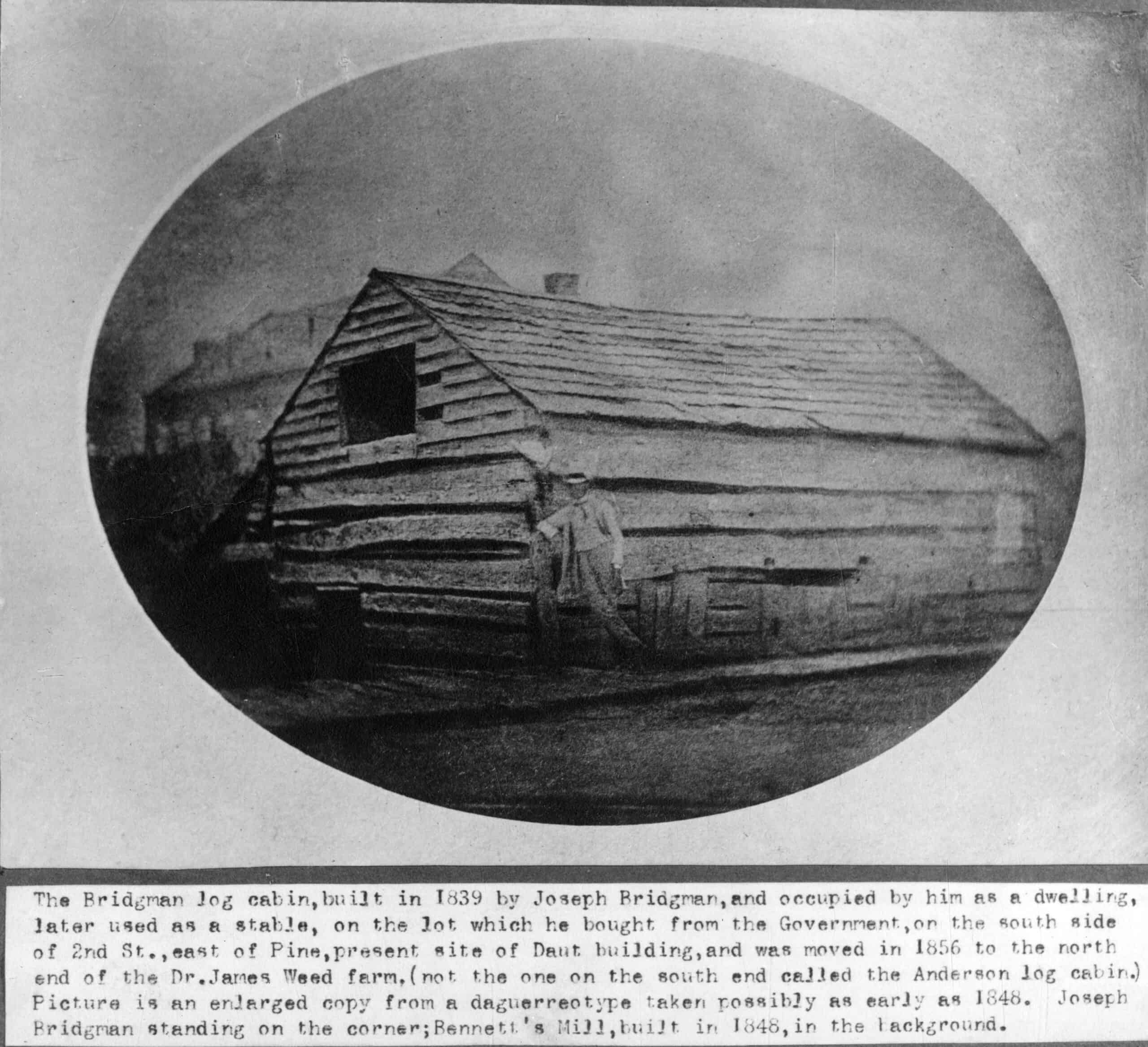
The Bridgman Log Cabin, built in 1839 by Joseph Bridgeman, and occupied by him as a dwelling, later used as a stable, on the lot which he bought from the Government, on the south side of 2nd St., east of Pine, present site of Daut building and was moved in 1856 to the north end of the Dr. James Weed farm, (not the one on the south end called the Anderson log cabin) Picture is an enlarged copy from a daguerreotype taken possibly as early as 1848. Joseph Bridgman standing on the corner; Bennett's Mill, built in 1848, in the background.

The Stern Wheel Congregational Church, which stood on a hill south of 4th St., east of Iowa Avenue near Sycamore, on rear of lot, facing river. Begun in 1843, first occupied Dec. 8th, 1844, dedicated Nov. 30, 1845, and the wooden belfry added in 1848, on the rear, hence the name then applied. Occupied about 10 years, Rev. A.B. Robbins, pastor. Torn down in March, 1868.

The Episcopal Church and Masonic Hall in 1841, a frame, 22 by 50 ft. built that year, by the Episcopalians and Masons, toward the rear of the Episcopal Church lot, the lower story used by the Episcopalians and sometimes by the Presbyterians; upper story occupied by the Masons from Dec. 13, 1841 until March 7, 1854. Moved to back of lot in 1854, later purchased by J.P. Walton, moved around facing Walnut St. on rear of present Grand Opera House lot, and rented to Universalists and Lutherans and for school purposes. Taken down during the Civil War. From drawing by J.P. Walton and used as an illustration in his "Pioneer Papers" and "Masonic History".
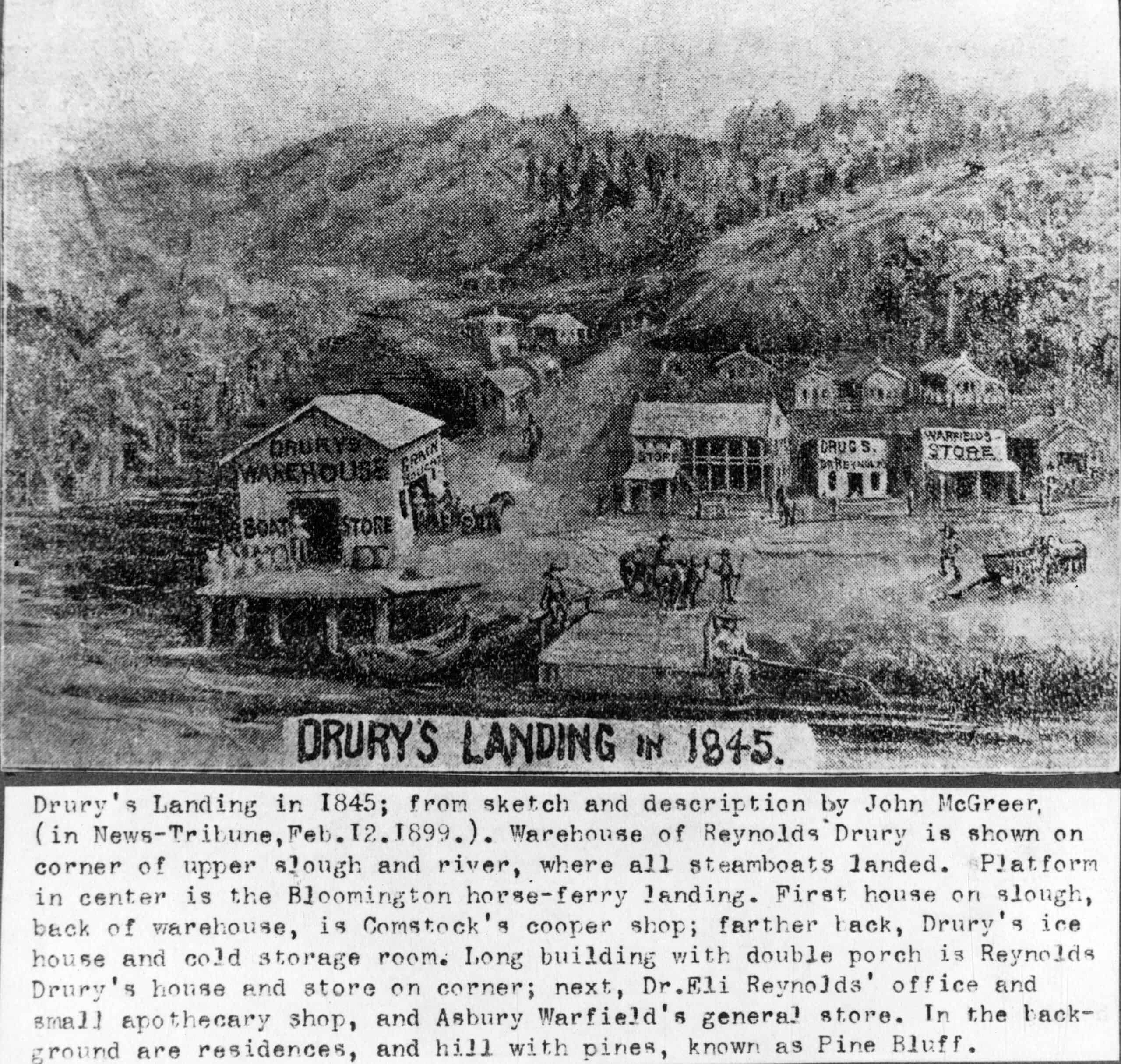
Drury's Landing in 1845

Corner 3rd St. and Iowa Avenue in 1848 as sketched from memory by John McGreer
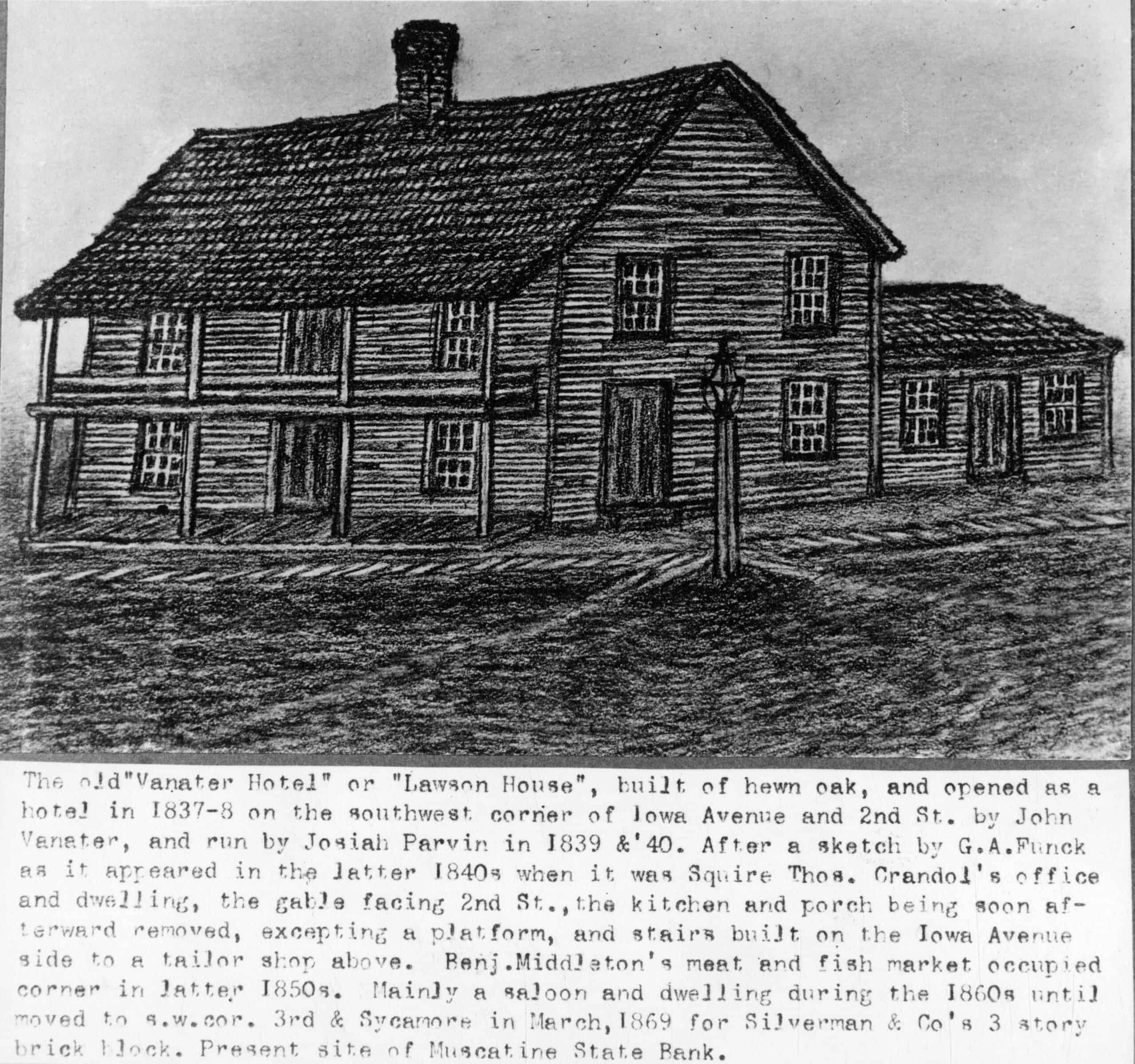
The old "Vanater Hotel" or "Lawson House"

The American House, built and opened in 1840 by T.S. Battelle

The old Wharf Boat built in the early 1840s for a steamboat landing by E. B. Kinson

The log hotel of Frederick Miller in 1844
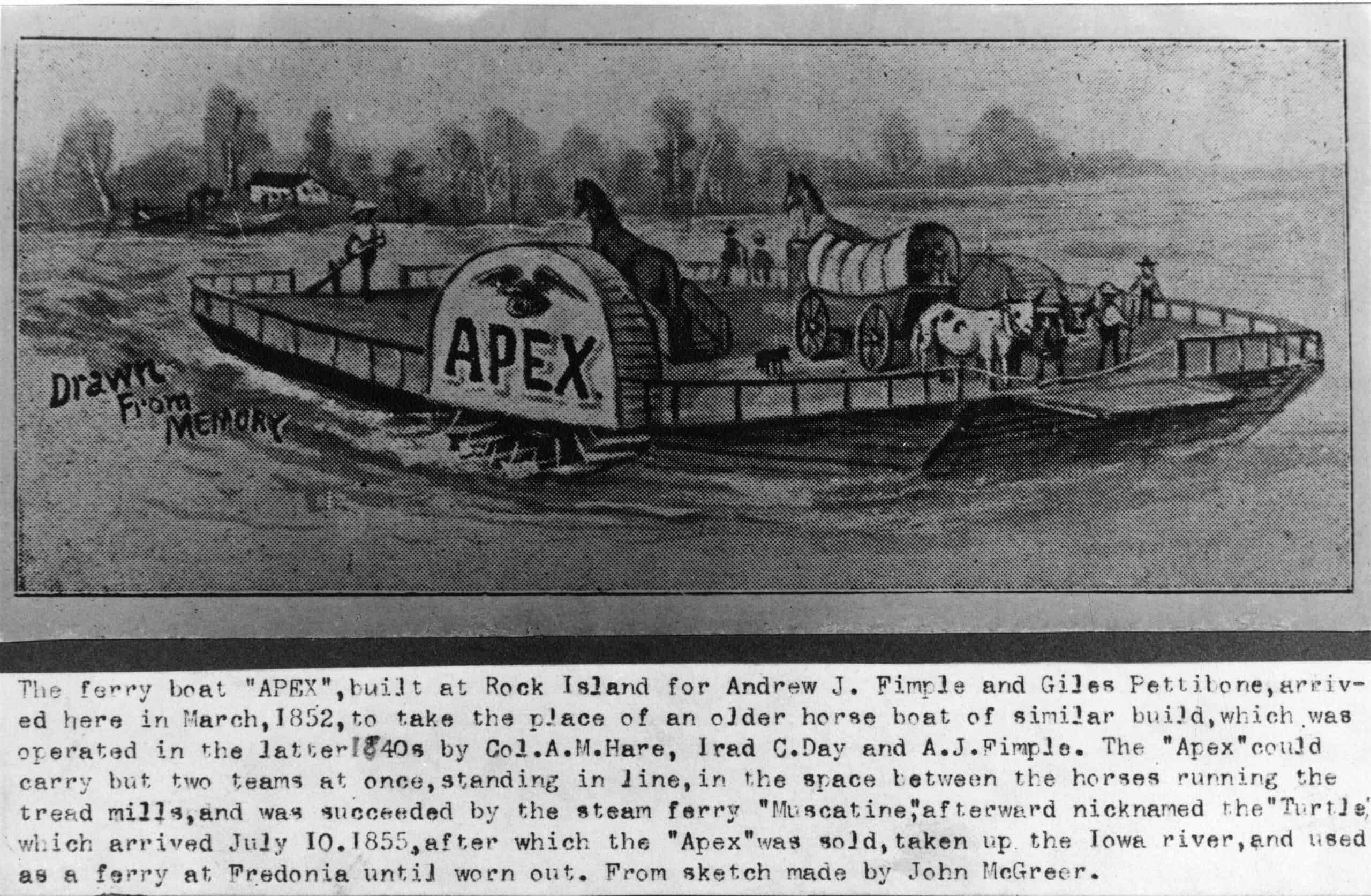
The ferry boat "Apex", built at Rock Island for Andrew J. Fimple and Giles Pettibone, arrived here in March, 1852

The Clover House in 1855, as engraved on a letter head of that date

Congregational Church, 2nd edifice, begun in 1852, dedicated Jan. 5, 1855

District School No. 1, a 2 story brick begun in the spring of 1851
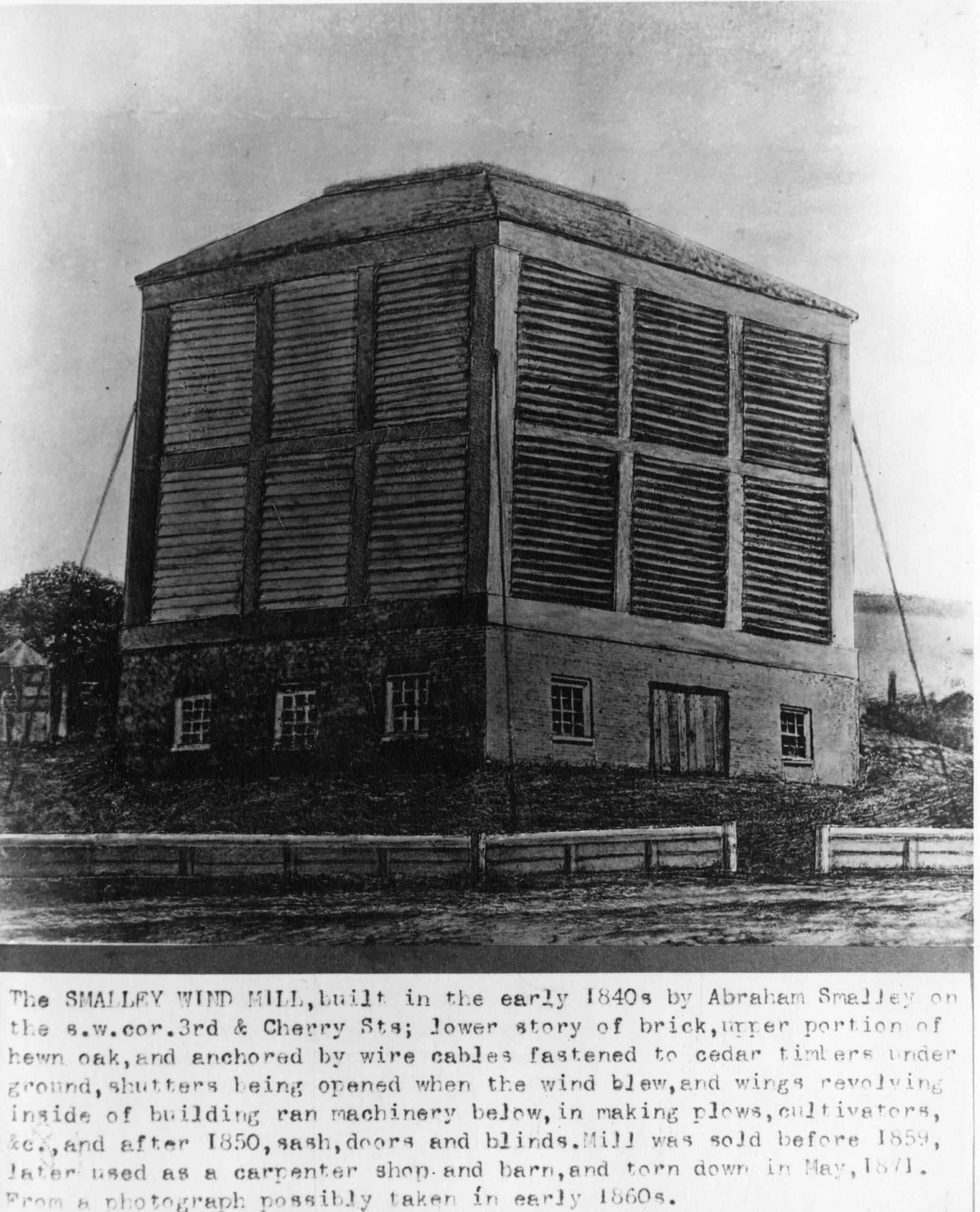
The Smalley Wind Mill, built in the early 1840s by Abraham Smalley

The Wienker Furniture Factory, built in 1855/56 in the bottom of the west branch of Pappoose Creek

The Pennsylvania House, formerly "Iowa House", built for Kinney, the rear portion in 1836 and the front in 1837-8

Masonic Building, built in 1852 by the Masonic Hall Company
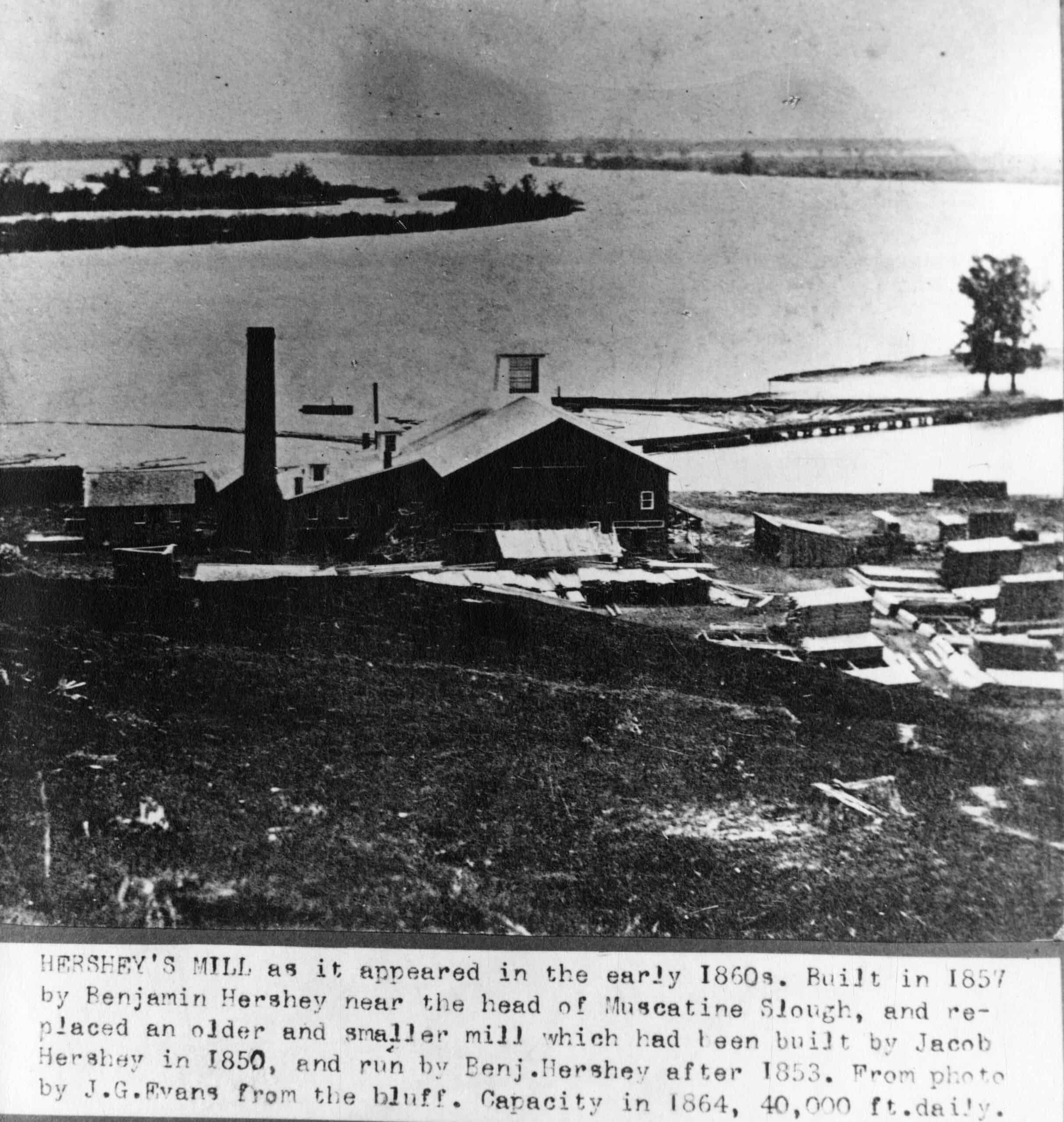
Hershey's Mill as it appeared in the early 1860s

Some of the old buildings which formerly stood near the river bank at Drury's Landing

Second Street Looking West From Cedar Street, 1869-70
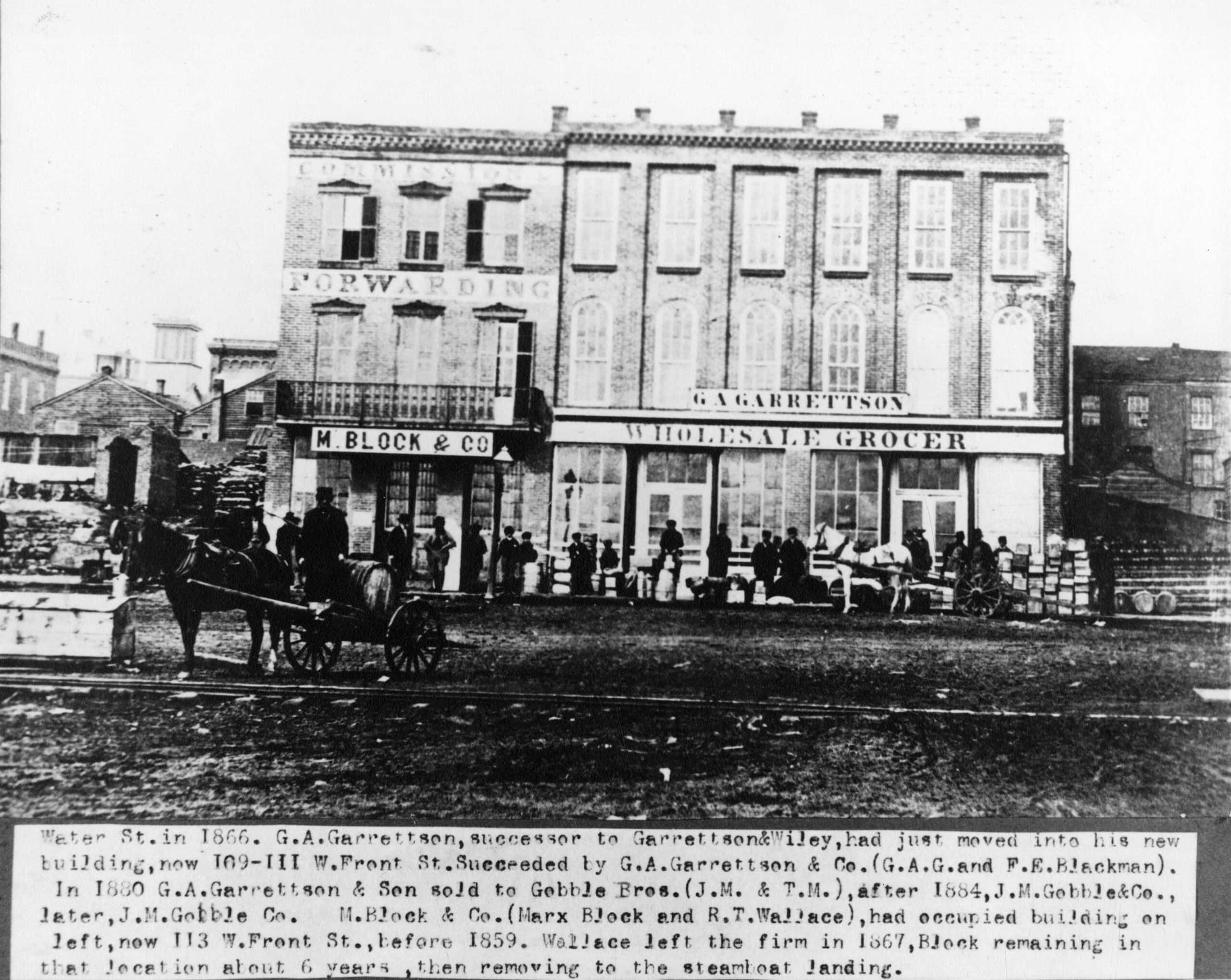
G A Garrettson Grocer on Water St. in 1866

Bennett's Flour Mill, first built in 1848, rebuilt after fire, August 23, 1851
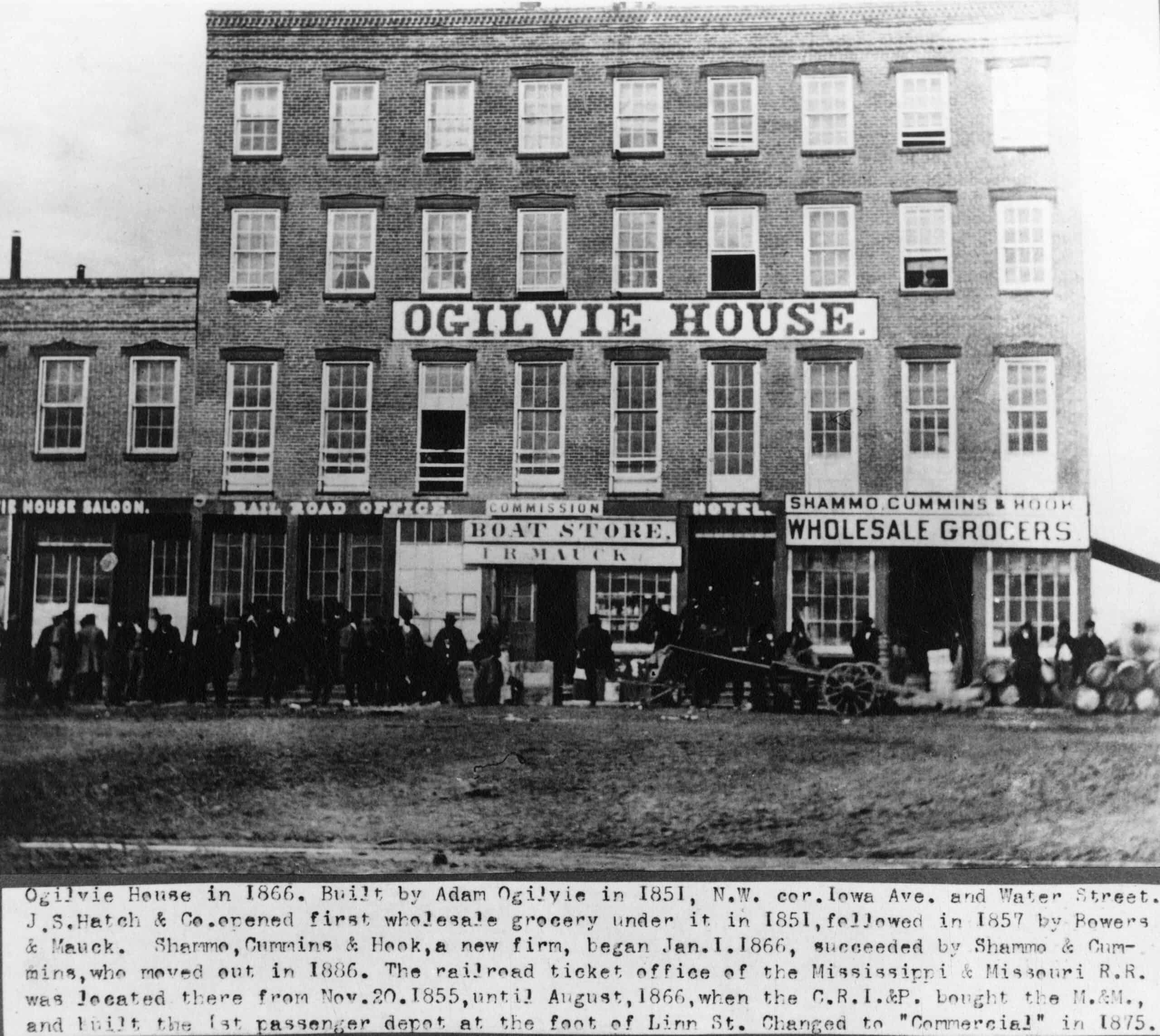
Ogilvie House in 1866, built in 1851

Iowa Ave from 2nd St., 1866

North East Corner 2nd and Pine, 1866
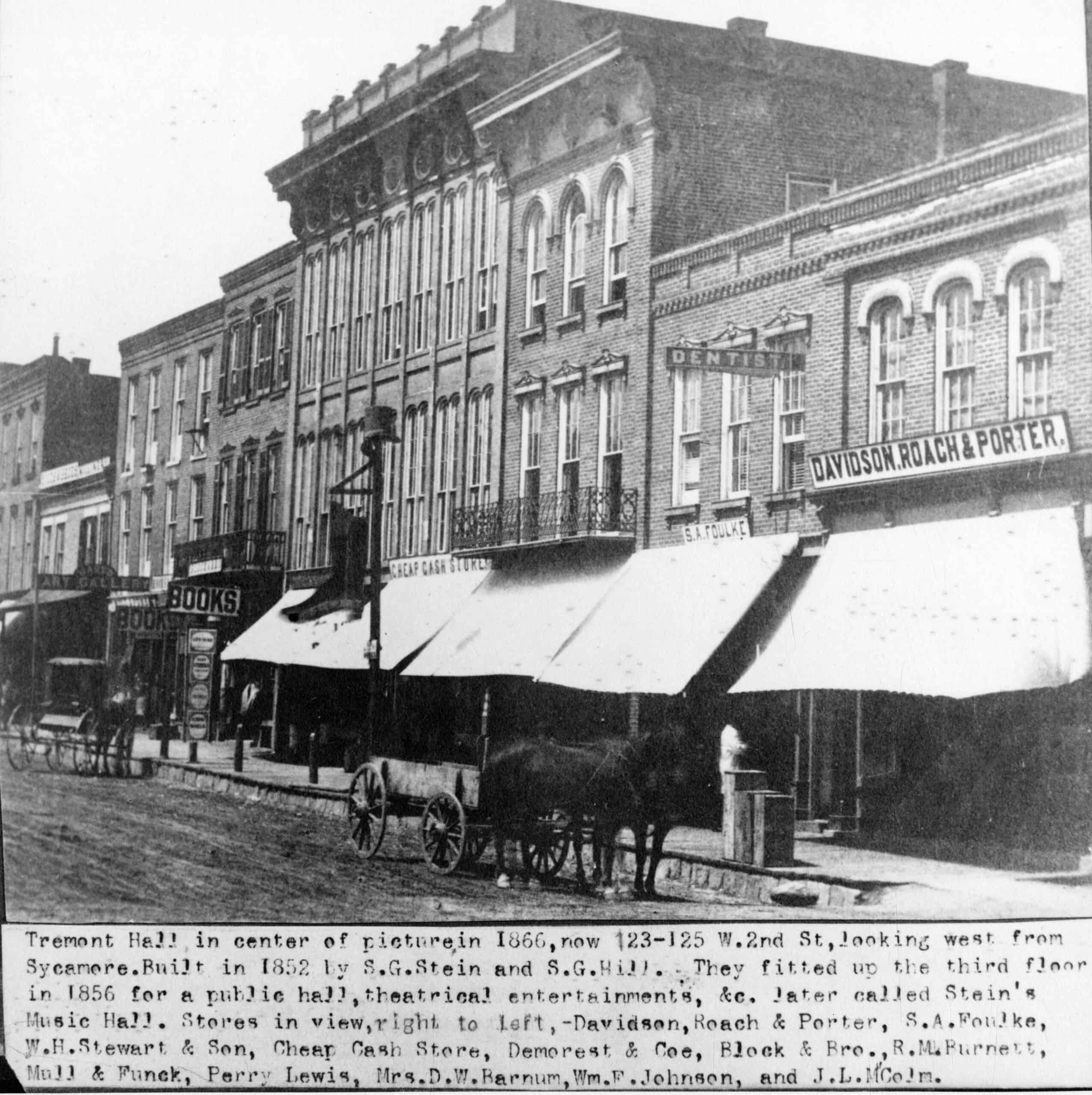
Tremont Hall in center of picture in 1866
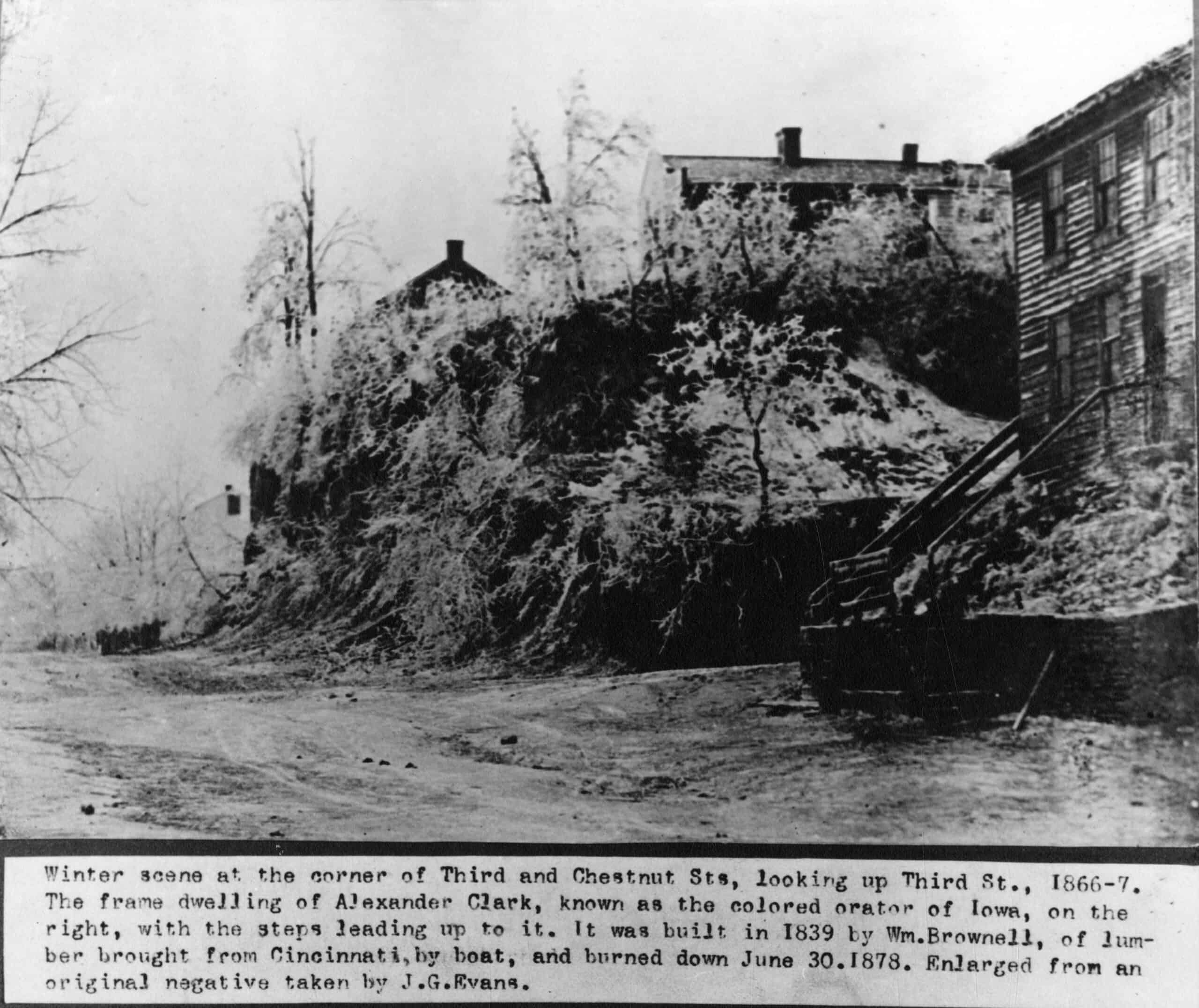
Alexander Clark House, corner 3rd and Chestnut 1866-7

Nevada Mill, built in 1852

First Graduating Class of Muscatine High School, 1866

The first Catholic Church

View Over Mouth of Mad Creek 1869
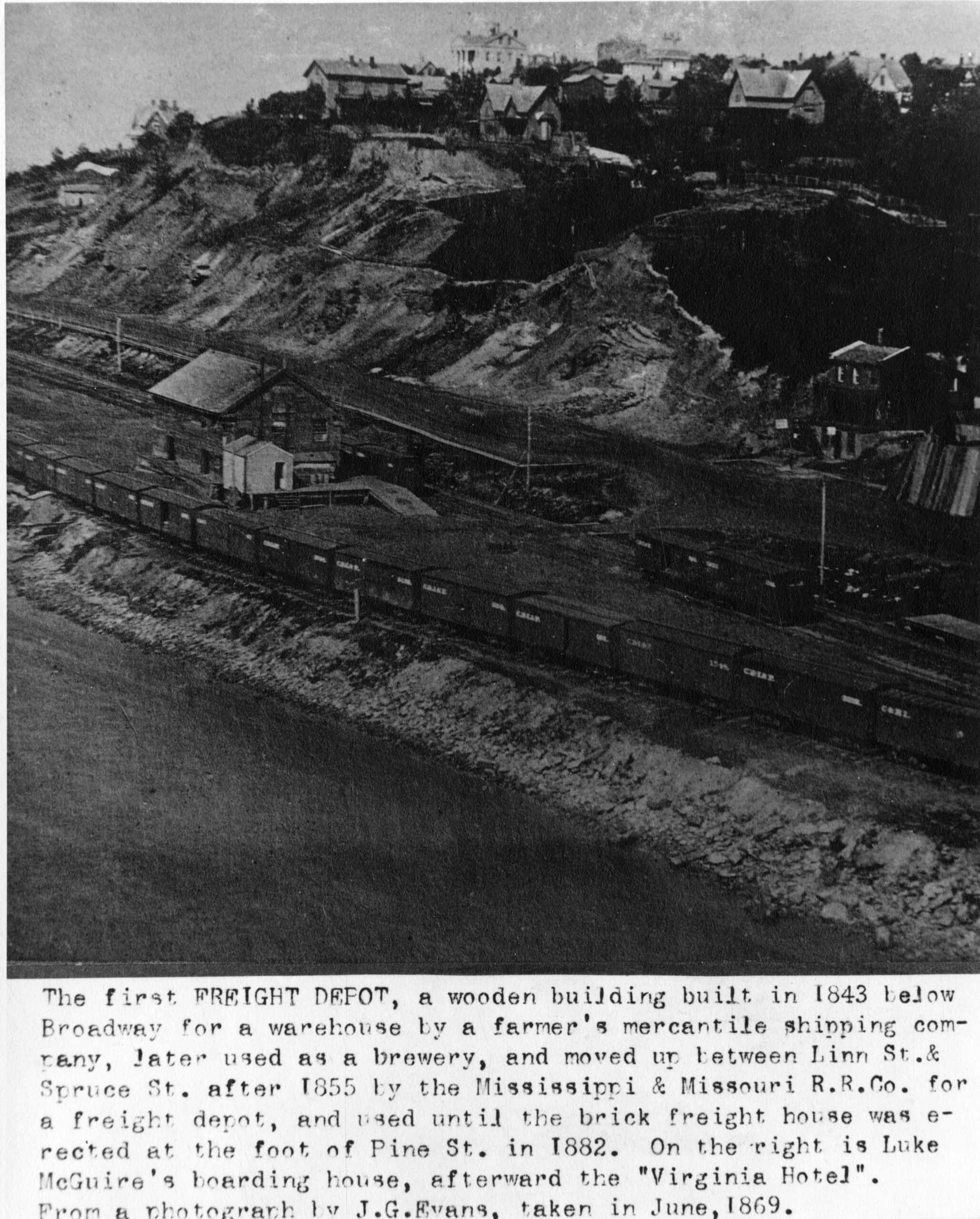
The first Freight Depot, a wooden building built in 1843

The first Passenger Depot, previously used as a station at Durant, moved here in Nov. 1866

West Side of Iowa Avenue above Third St. in 1874

Binz' Brewery, built in the summer of 1856

Connell Bros' Livery Stable, erected by Col. Isett in 1852

No 2 School, or "Old No. 2", built in 1850, opened in 1851

No 1 School, built in 1869

The old High School, built in 1873

The old City Hall in 1877

Park House, built by Neidig in 1851

Grange Factory, built Northeast Corner of Mulberry and Third St.

Grange Factory Employees
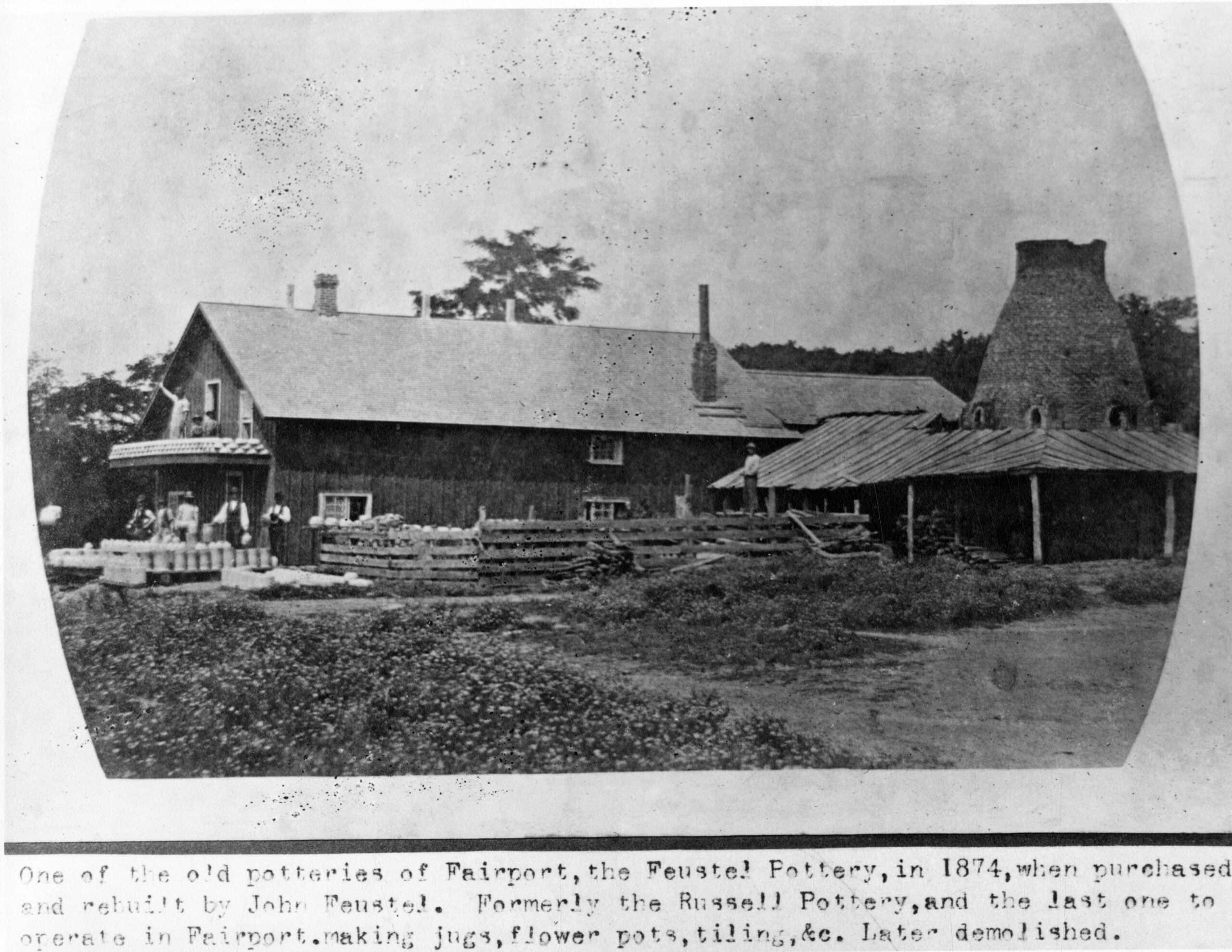
Feustel Pottery Fairport 1874
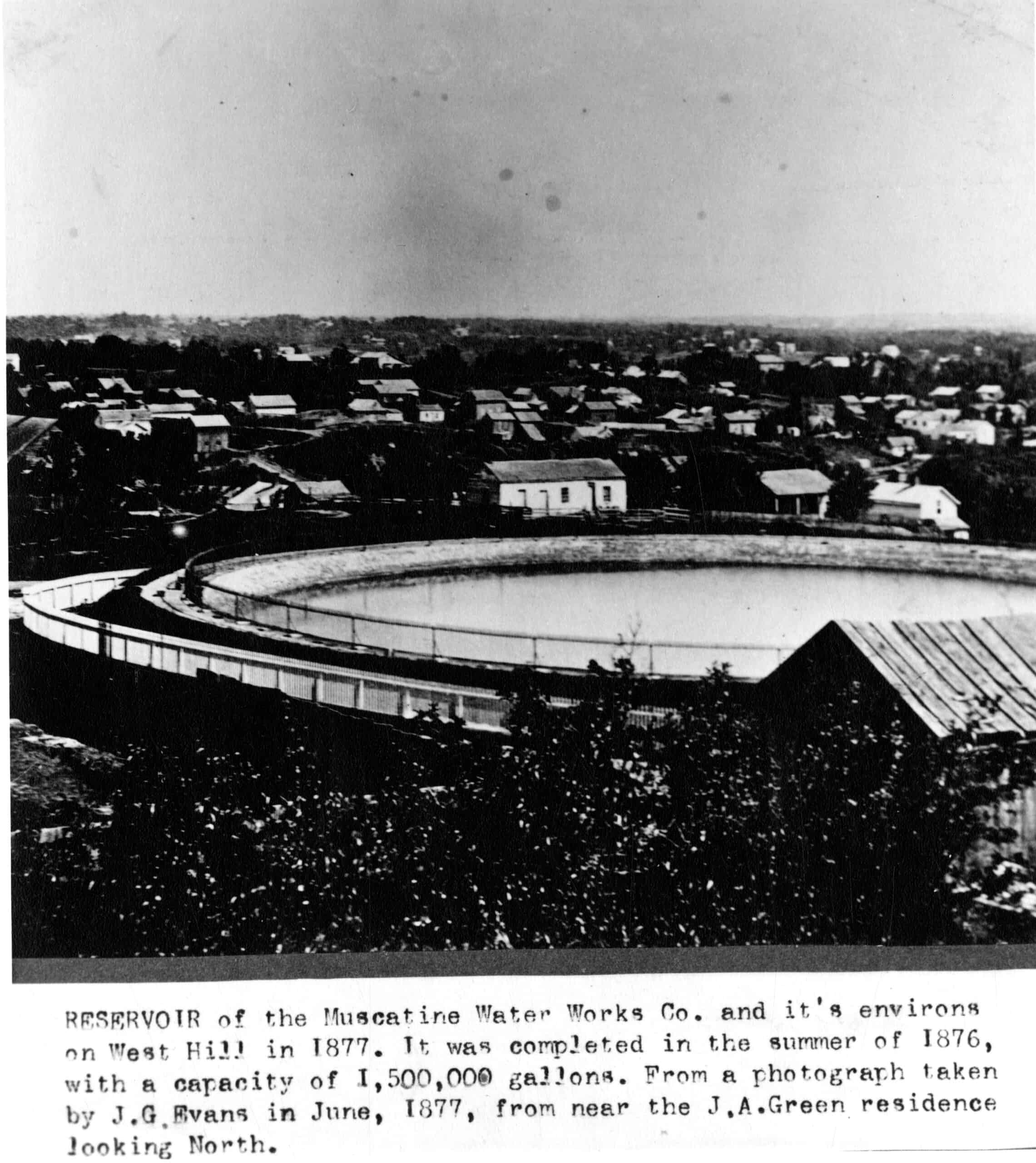
Reservoir of Muscatine Water Works and its environs on West Hill in 1877

Old Water Works Engine House on levee between Chestnut and Pine St, built in 1876
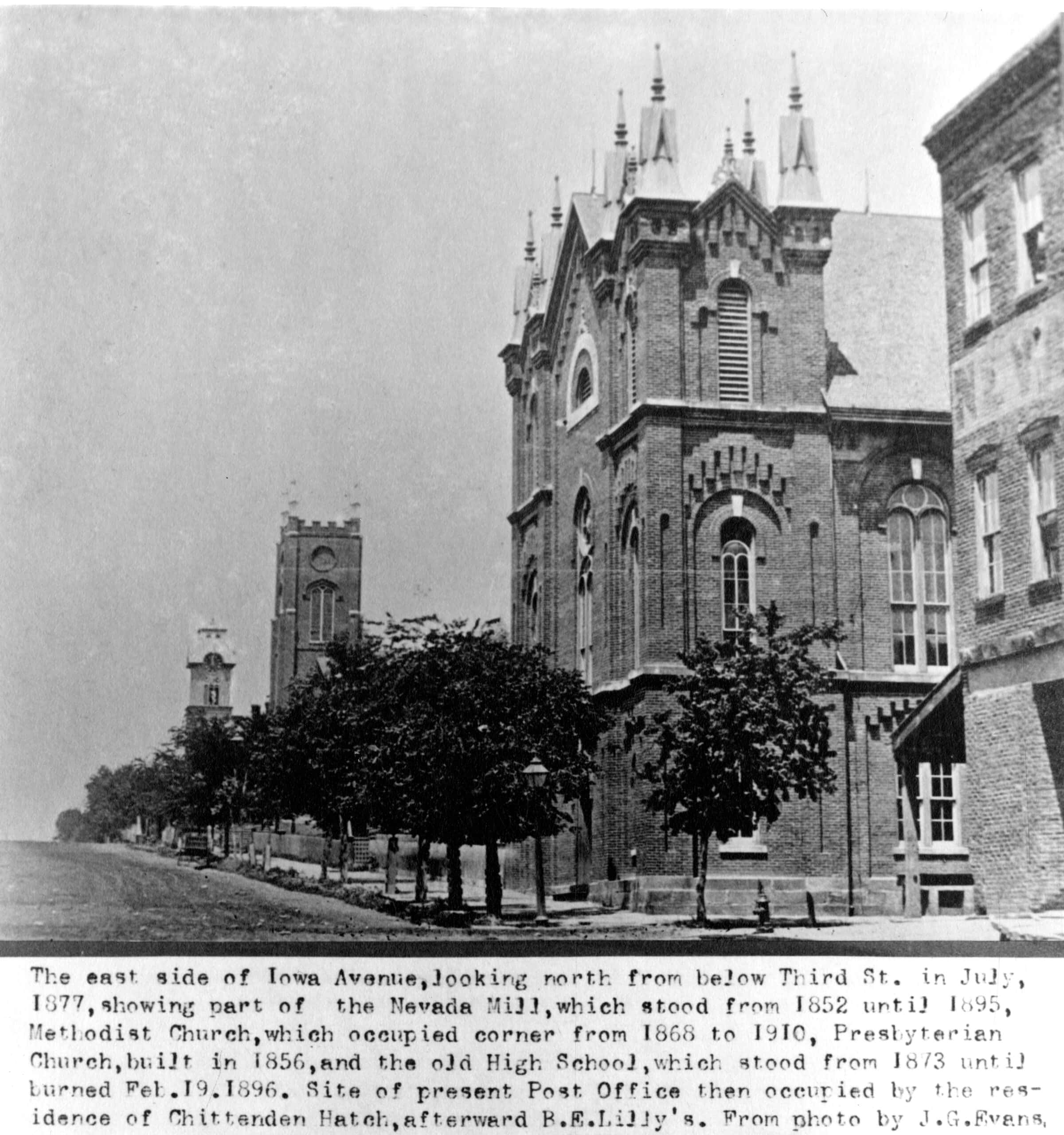
East side, Iowa Avenue looking north from below Third St. in 1877

South side of 2nd St, east of Sycamore 1877
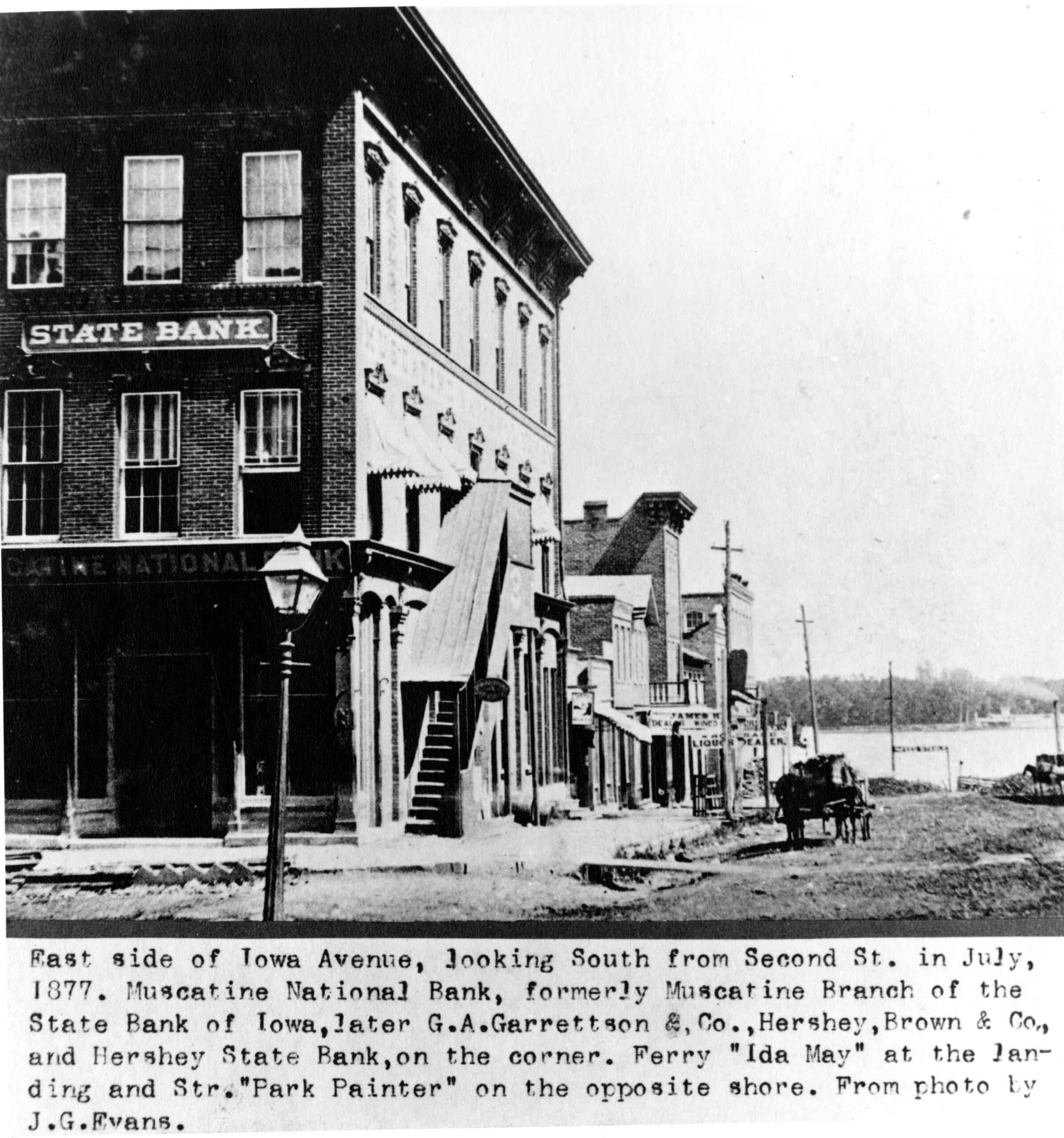
East side of Iowa Avenue looking south from Second St. 1877

East side of Iowa Ave looking north from Front St, 1877

Arch, on Papoose Creek bridge, 2nd & Sycamore 1879

The Hershey Hose Company, an independent fire company organized 1880

Steamer Golden Gate with Presbyterian Sunday School excursion in 1887
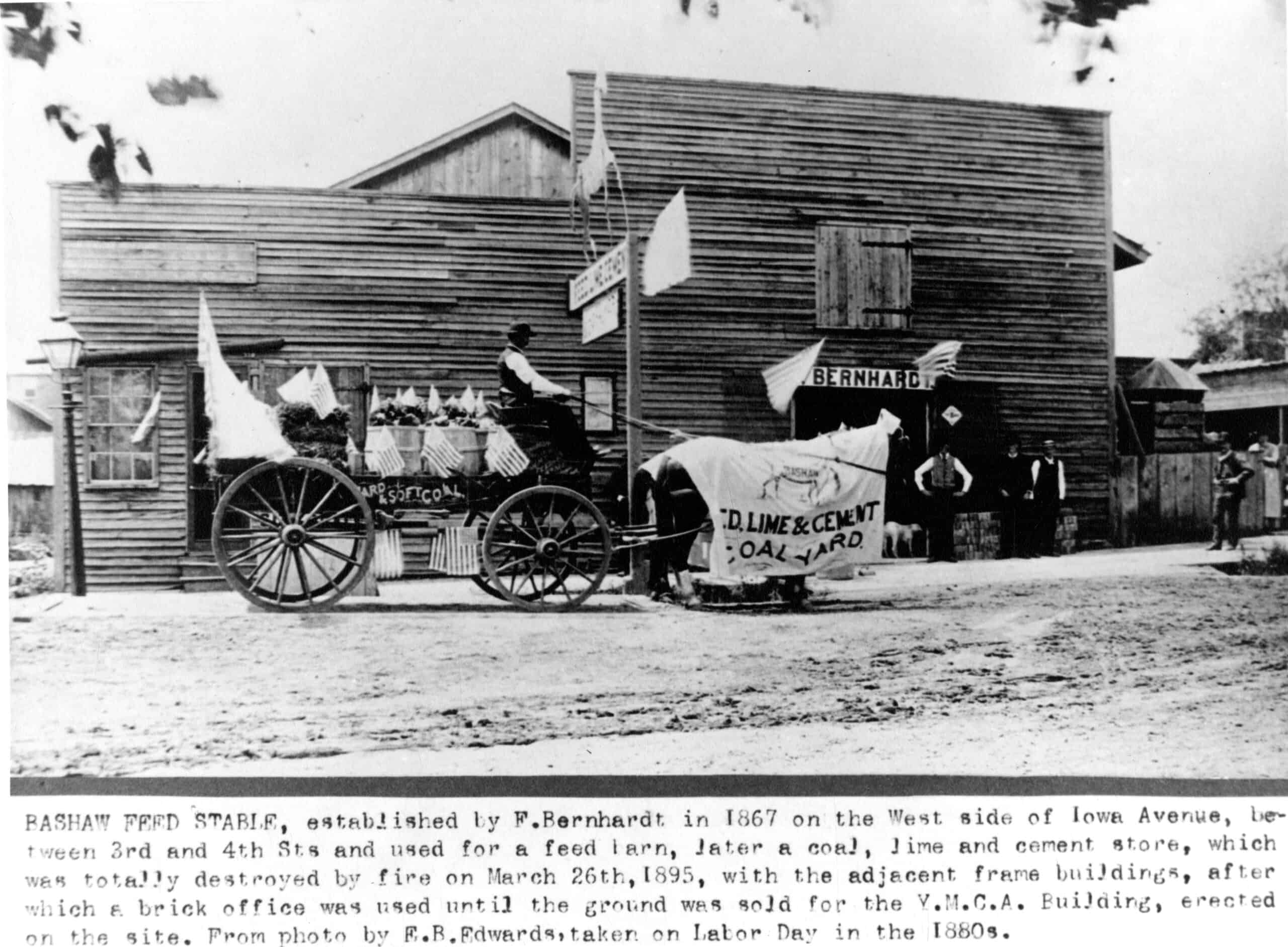
Bashaw Feed Stable established by Bernhardt in 1867

Neidig & Cadle Pork House, Sketch made by W.G. Jones, 1889

Turner Opera House, frame building erected in 1882
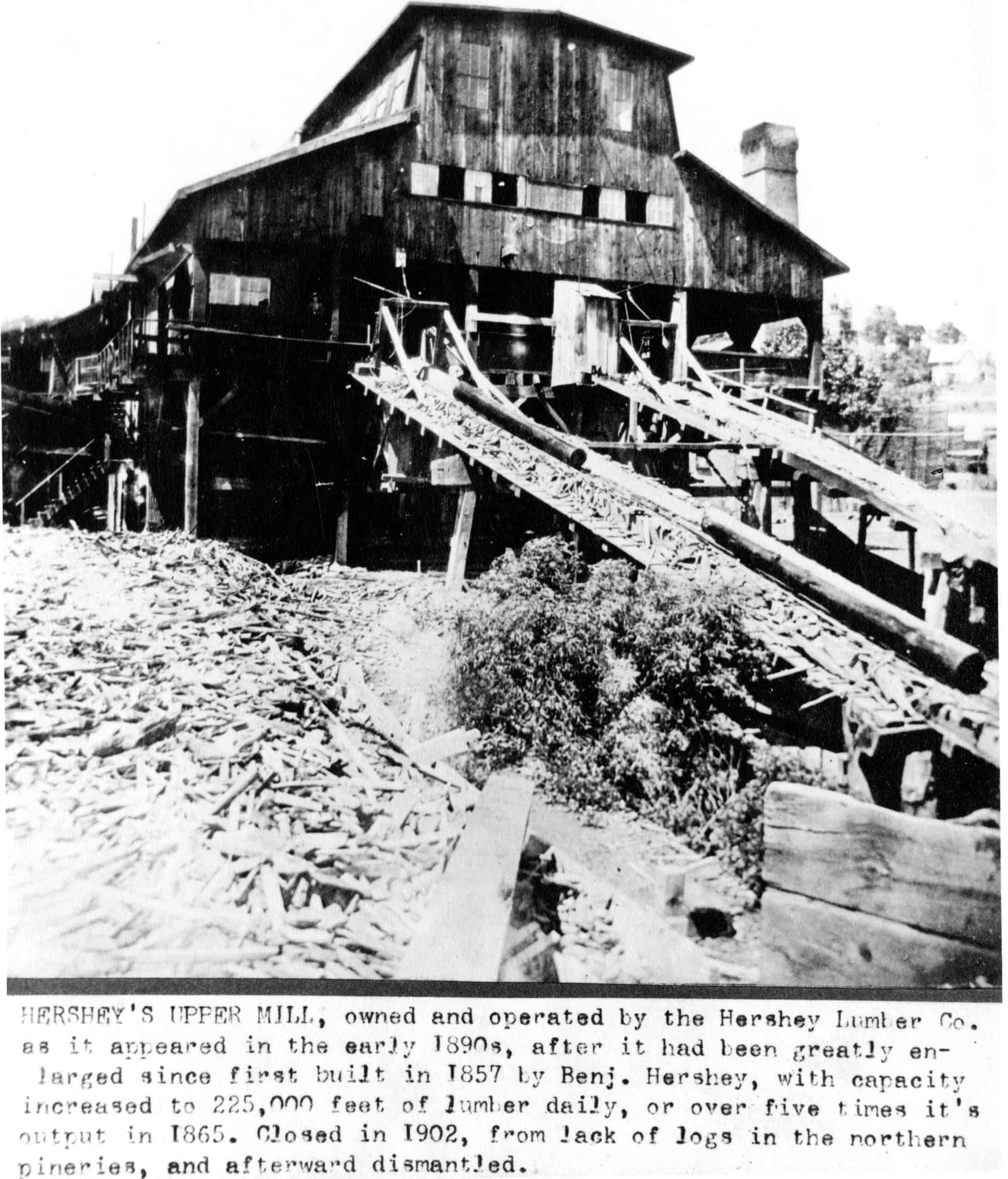
Hershey's Upper Mill owned and operated by the Hershey Lumber Co in 1890s

Old Street Car Barn of the Muscatine City Railway Company, 1887

Scene at the corner of 3rd and Mulberry in 1889
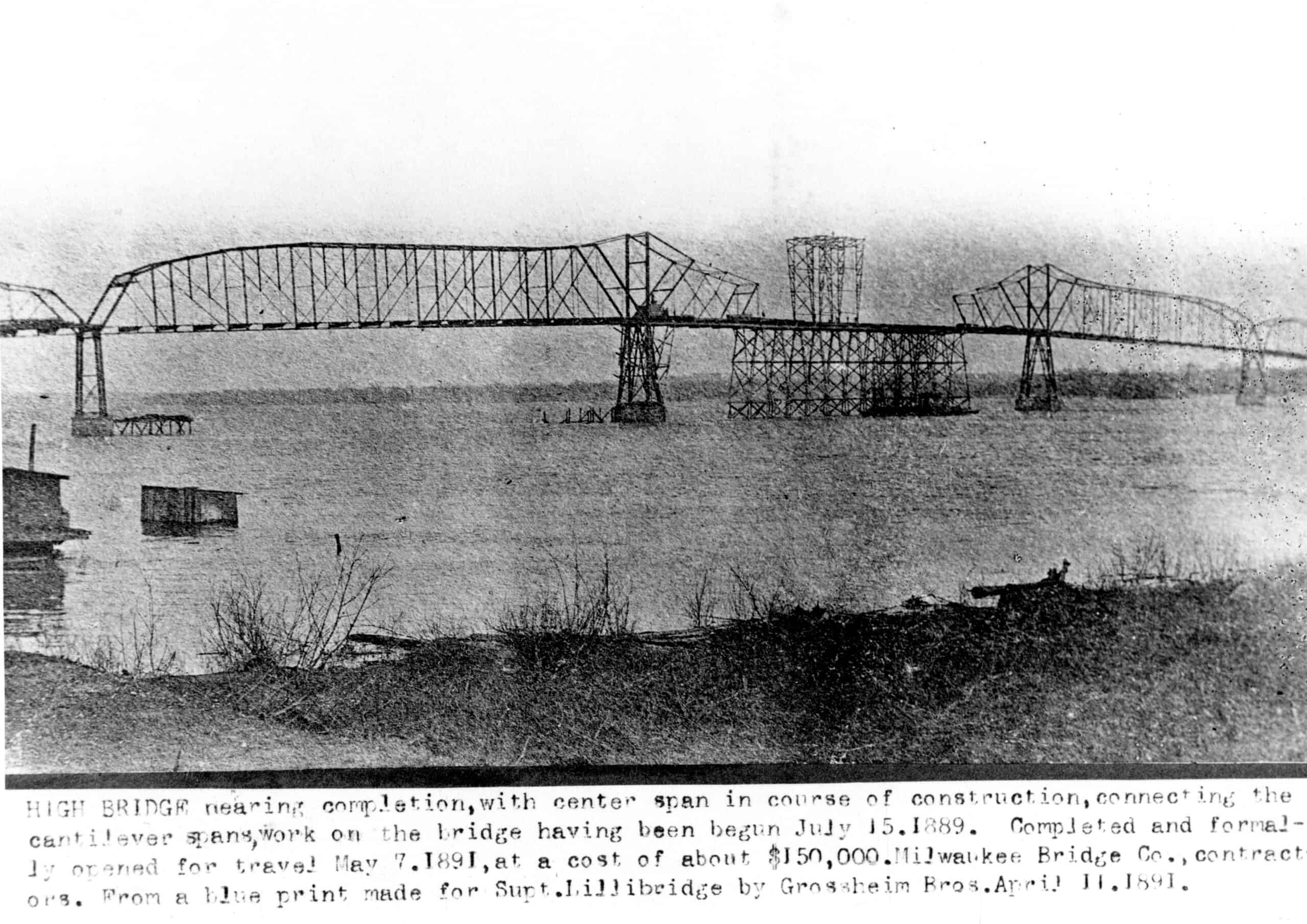
High bridge, nearing completion, 1891
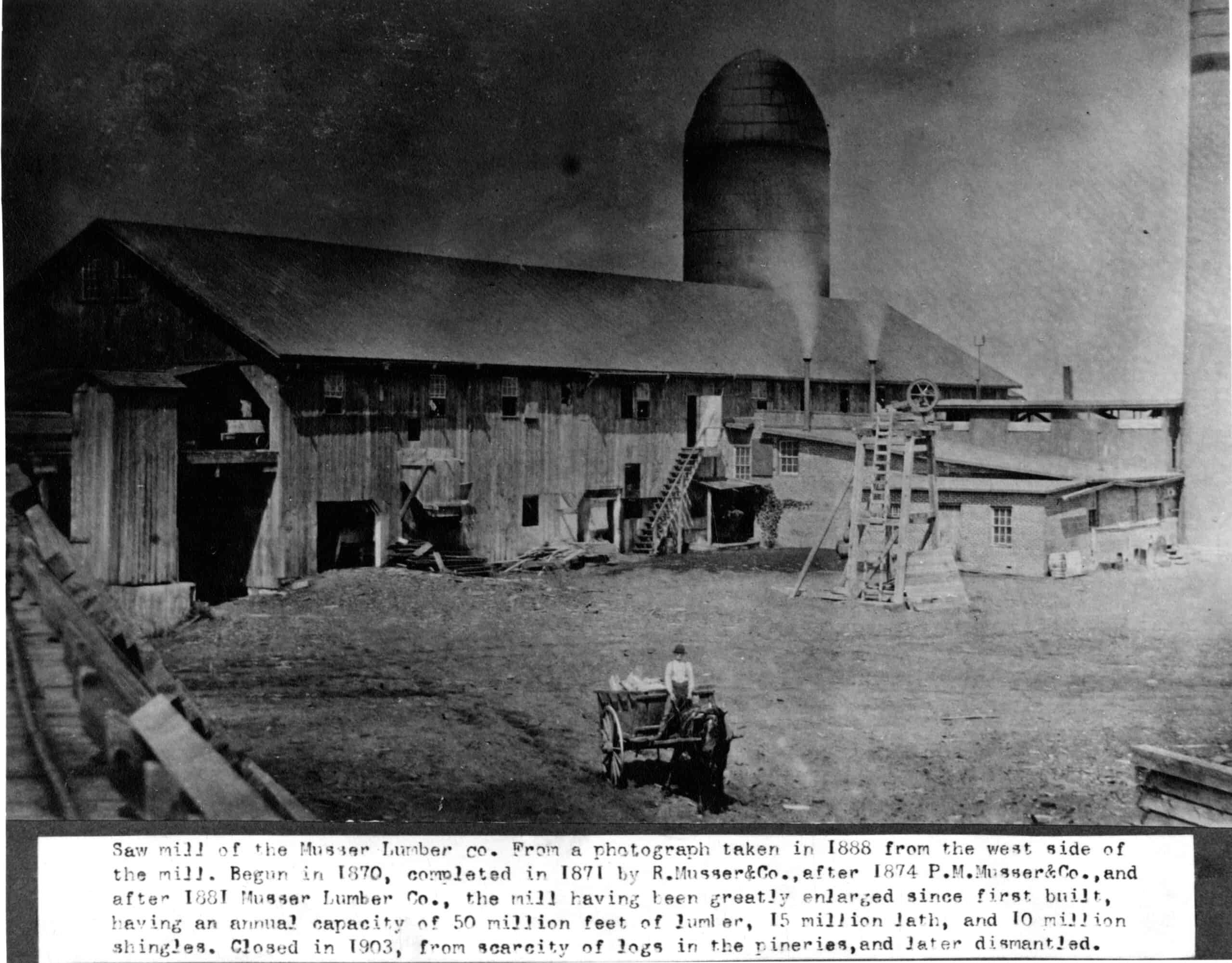
Saw mill of the Musser Lumber Co. 1888

Inauguration of the First Electric Cars in Muscatine, 1893

Williams Rolling Mill built in 1893

Section of the main truck of the Pappoose sewer between Front and 2nd Sts. 1895

Covering up Papoose Creek between 2nd & 3rd Sts, 1895

Steamer Quincy under High Bridge

River front below High Bridge

Some residences on West Hill

Eight Mile Bridge, Muscatine Slough, 1901

River & High Bridge from West Hill, 1901

Graham73 Grand Opera House, 1901

Hospital at Country Farm, 1900

Townhead Island from West Hill, 1901

Lumber District from West Hill, 1901
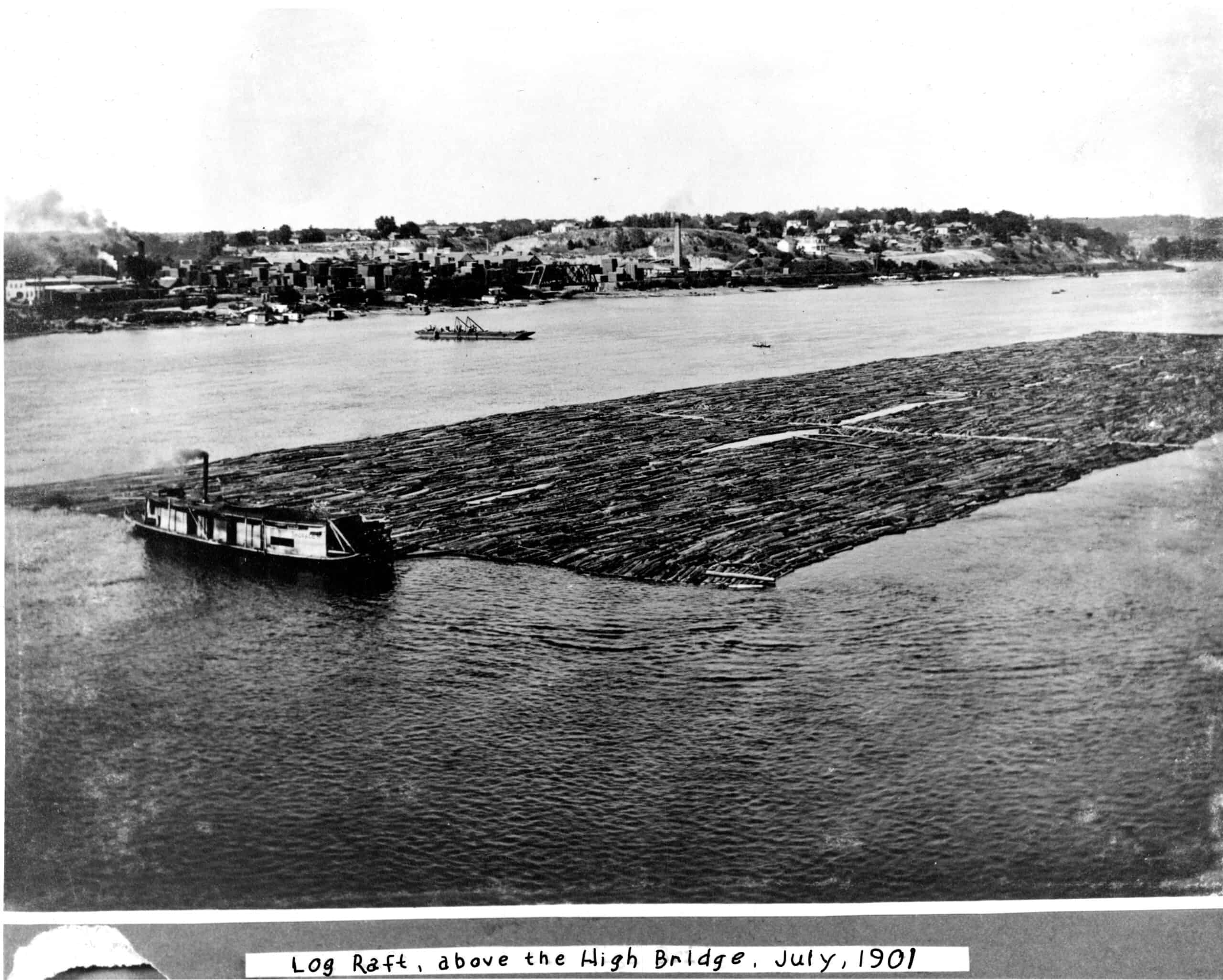
Log Raft above High Bridge, 1901

Central business section of Muscatine from High Bridge, 1919

A gravel pit on Muscatine Island, 1919
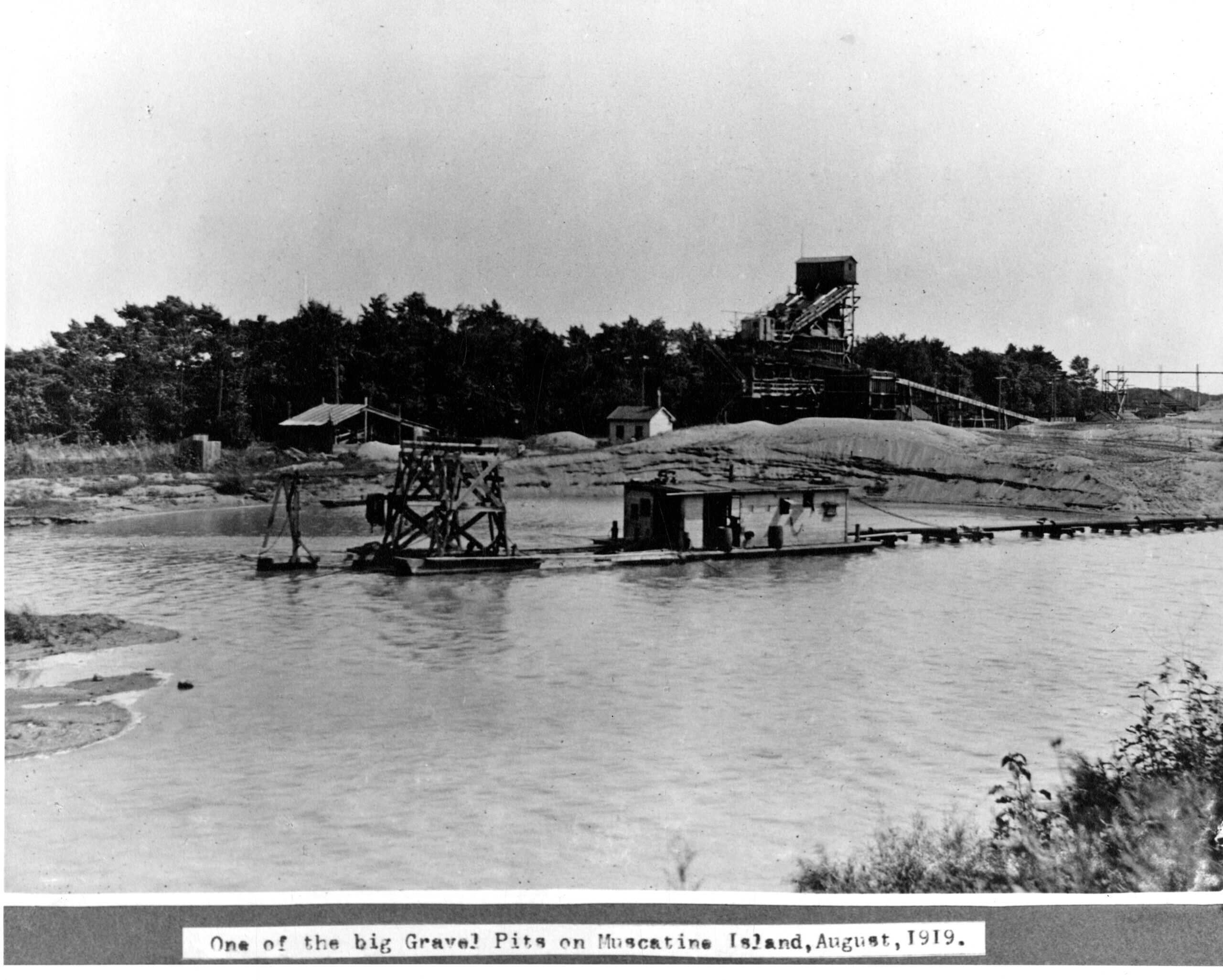
One of the big gravel pits on Muscatine Island, 1919

Looking up Iowa Avenue from roof of Hotel Muscatine, 1919

City Water Works Pumping Station, 1919

New Muscatine County Court House, completed 1909, Photo taken 1919
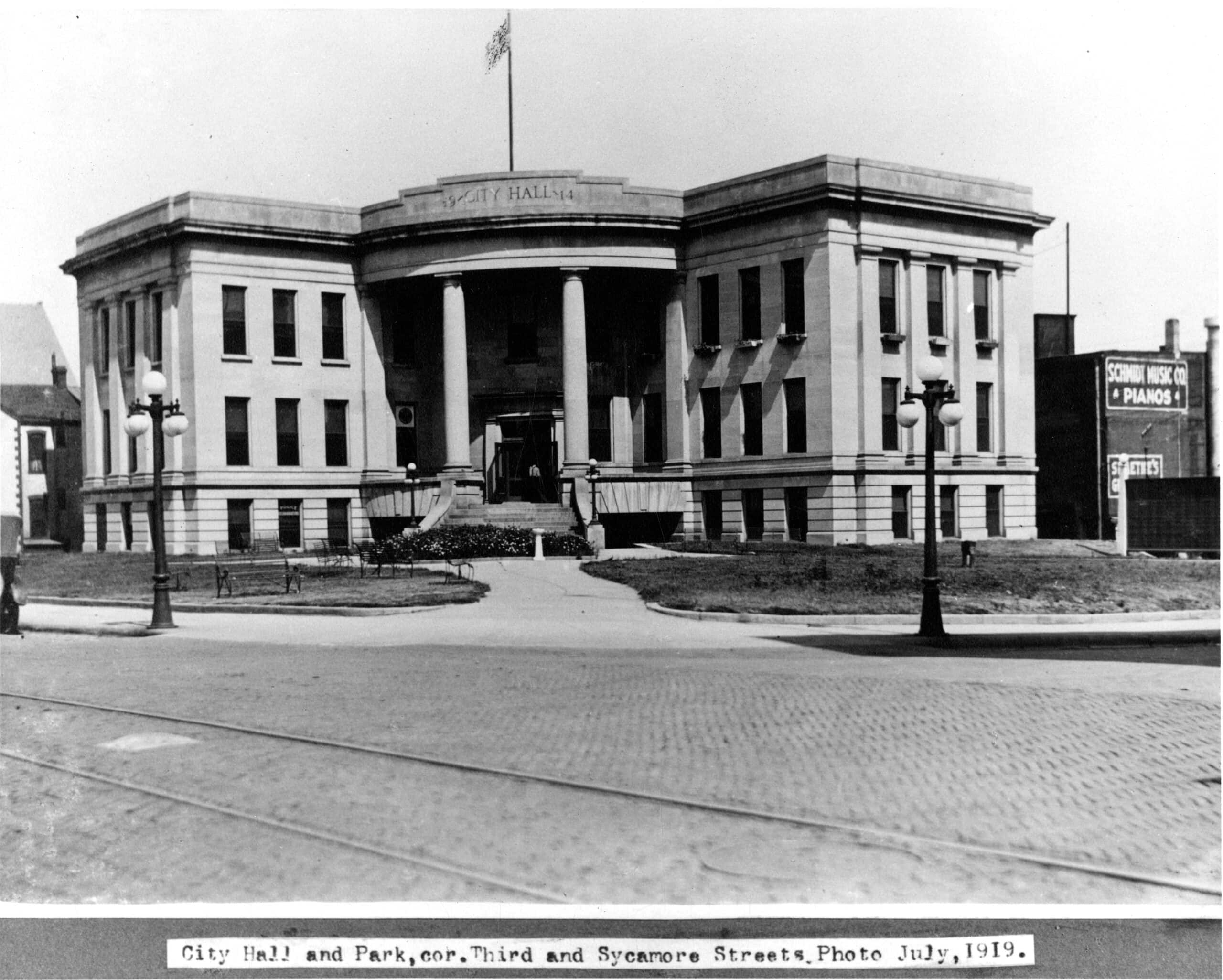
City Hall and Park, 1919
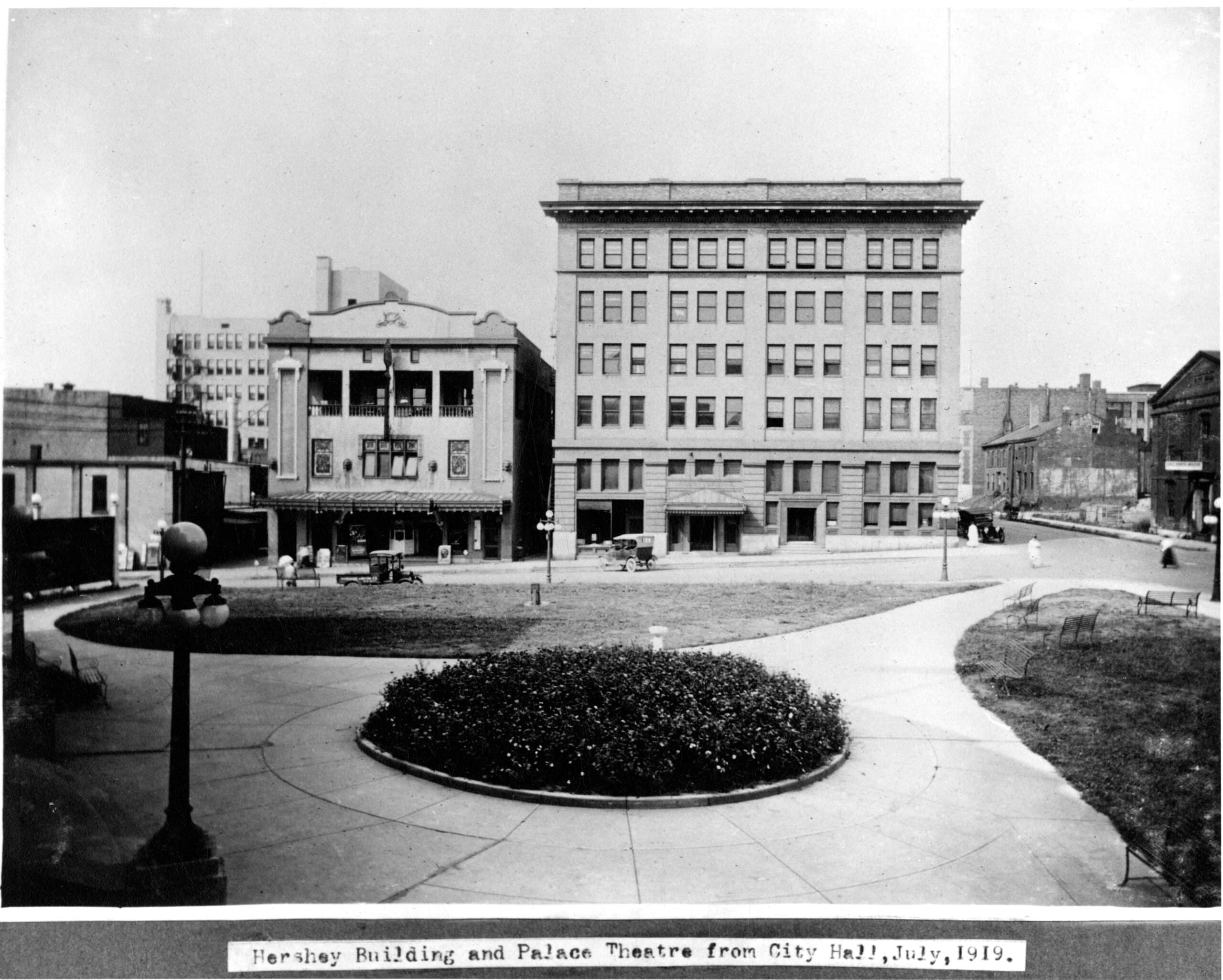
Hershey Building, Palace Theater, 1919

US Post Office, Iowa and Fourth 1919

YMCA and PM Musser Public Library 1909

Laurel Building, corner of Second & Iowa, 1919

High School Building

Second Street, East of Chestnut

Chapel at Greenwood Cemetery
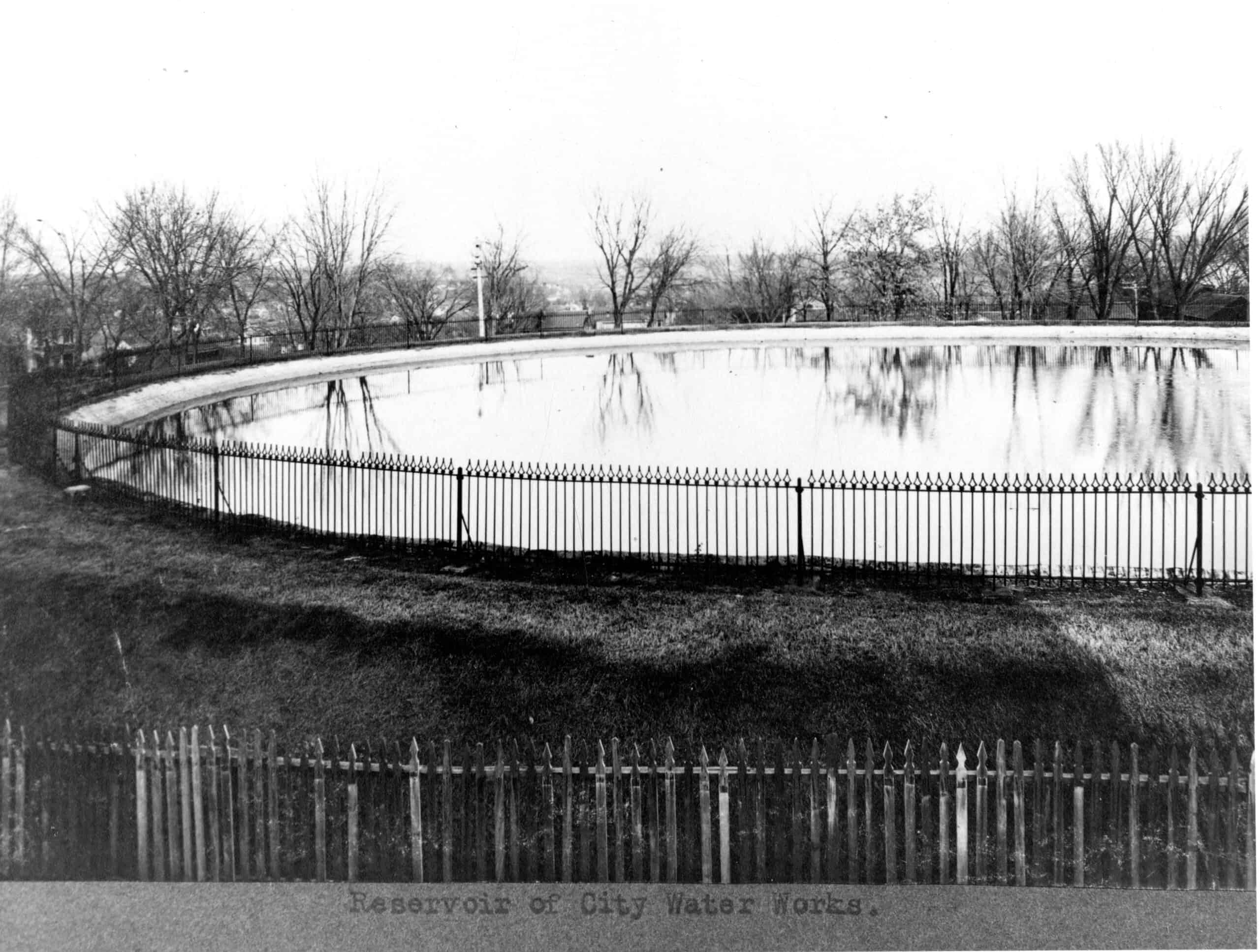
Reservoir of City Water Works

Arrival of a log raft and a cargo of shells
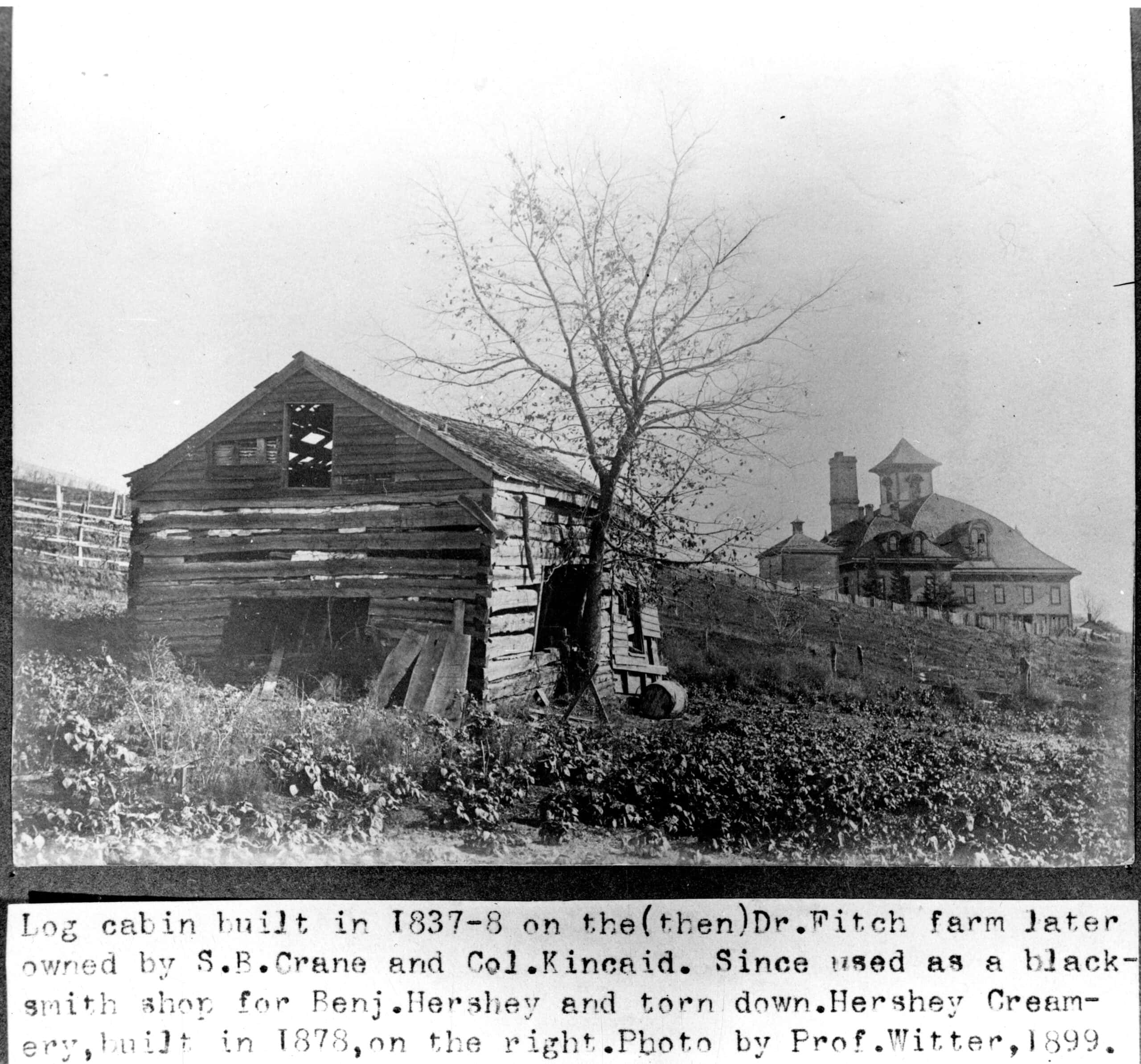
Log cabin built in 1837 on Dr. Fitch farm, later owned by S.B. Crane and Col. Kincaid. Photo by Prof. Witter 1899
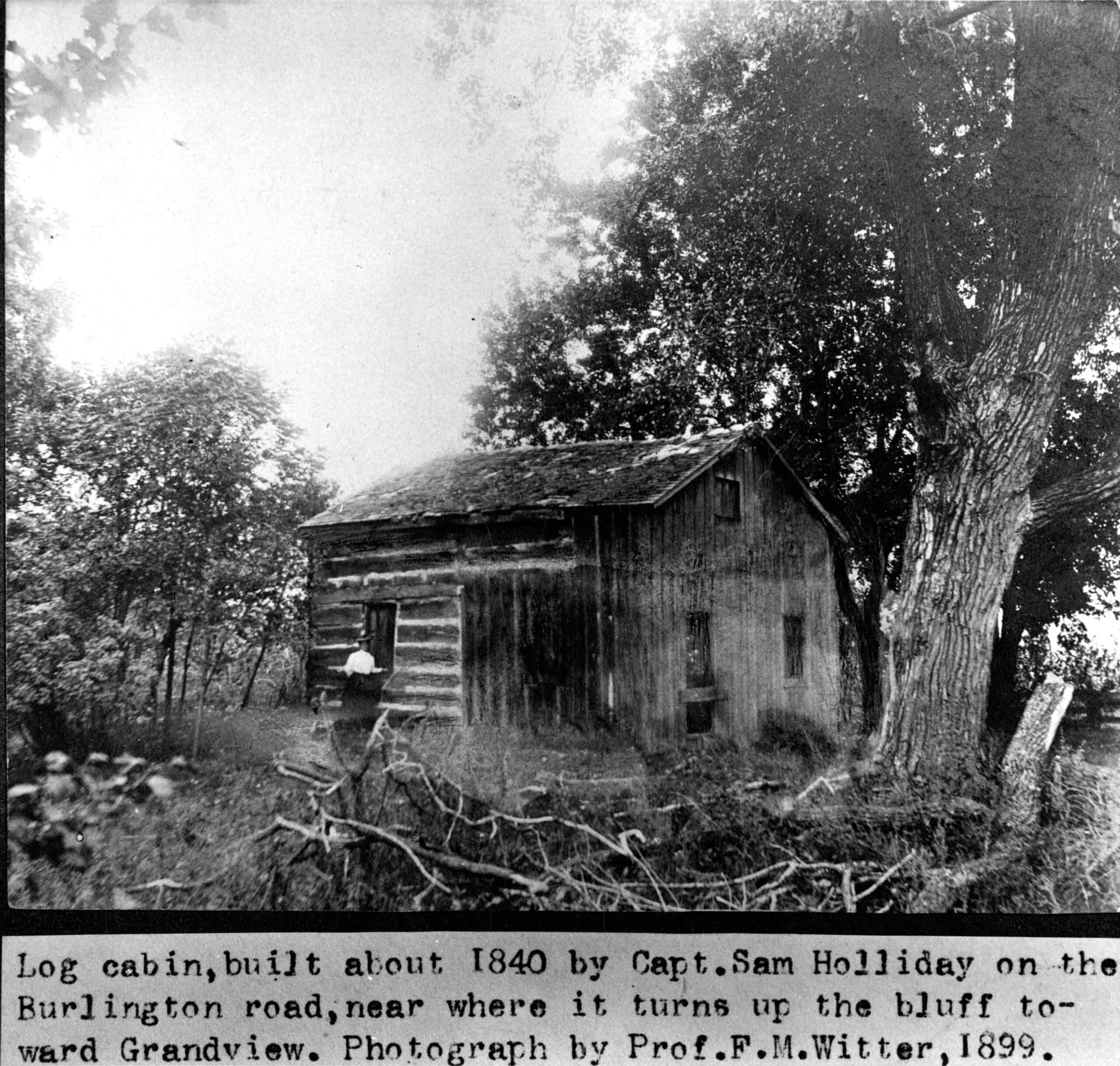
Log cabin built about 1840 by Capt. Sam Holliday on Burlington Road. Photo by Prof. Witter 1899
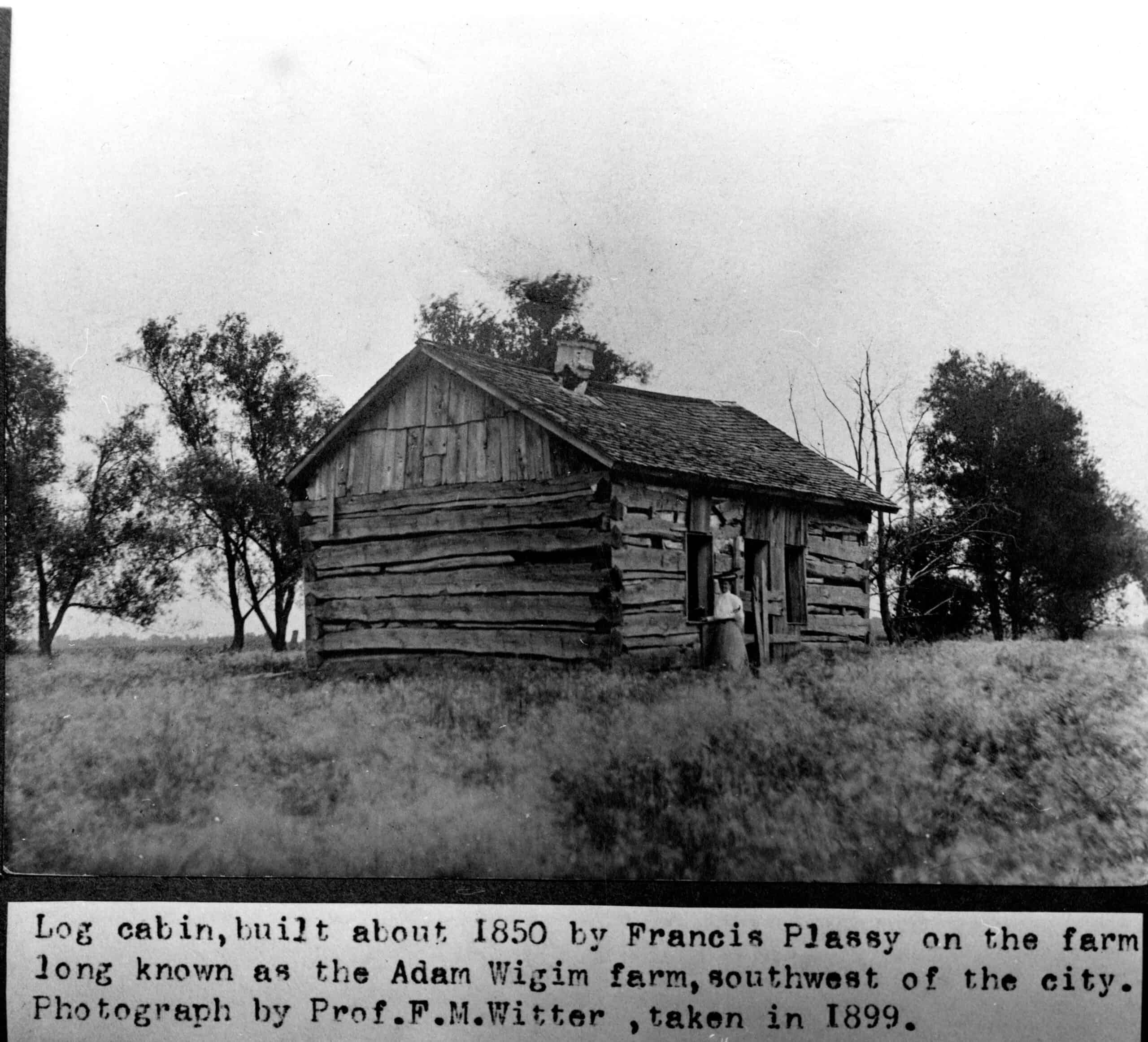
Log cabin built about 1850 by Francis Plassy. Photo by Prof Witter, 1899

Old tavern or eating house, 1848
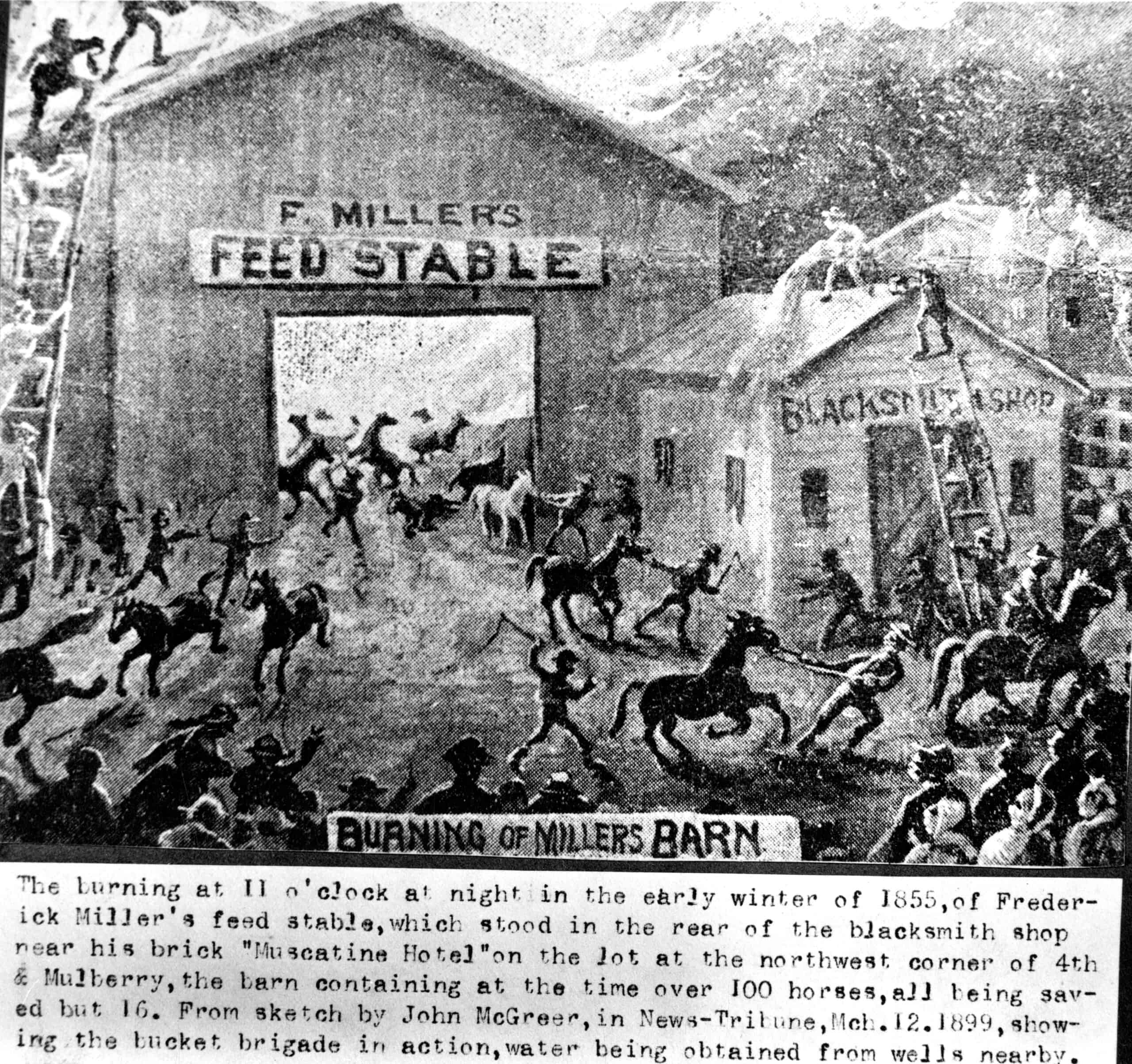
The burning at Frederick Miller's feed stable, sketch by John McGreer

Scene on the Fair Grounds, original negative made by J.G. Evans

An old brick yard by Nyenhuis and Freers in 1866, negative made by J.G. Evans

Color Guard, 35th Inf., 1863

Jacob Butler residence, negative made by J.G. Evans

Southeast corner of Second and Cedar Streets in 1866. Photo by J.G. Evans

Baptist Church, southwest corner of 3rd and Cedar Sts, 1866. Photo by J.G. Evans

Hanna House at the left, Fay's brick house, Second and Locust. Photo by J.G. Evans
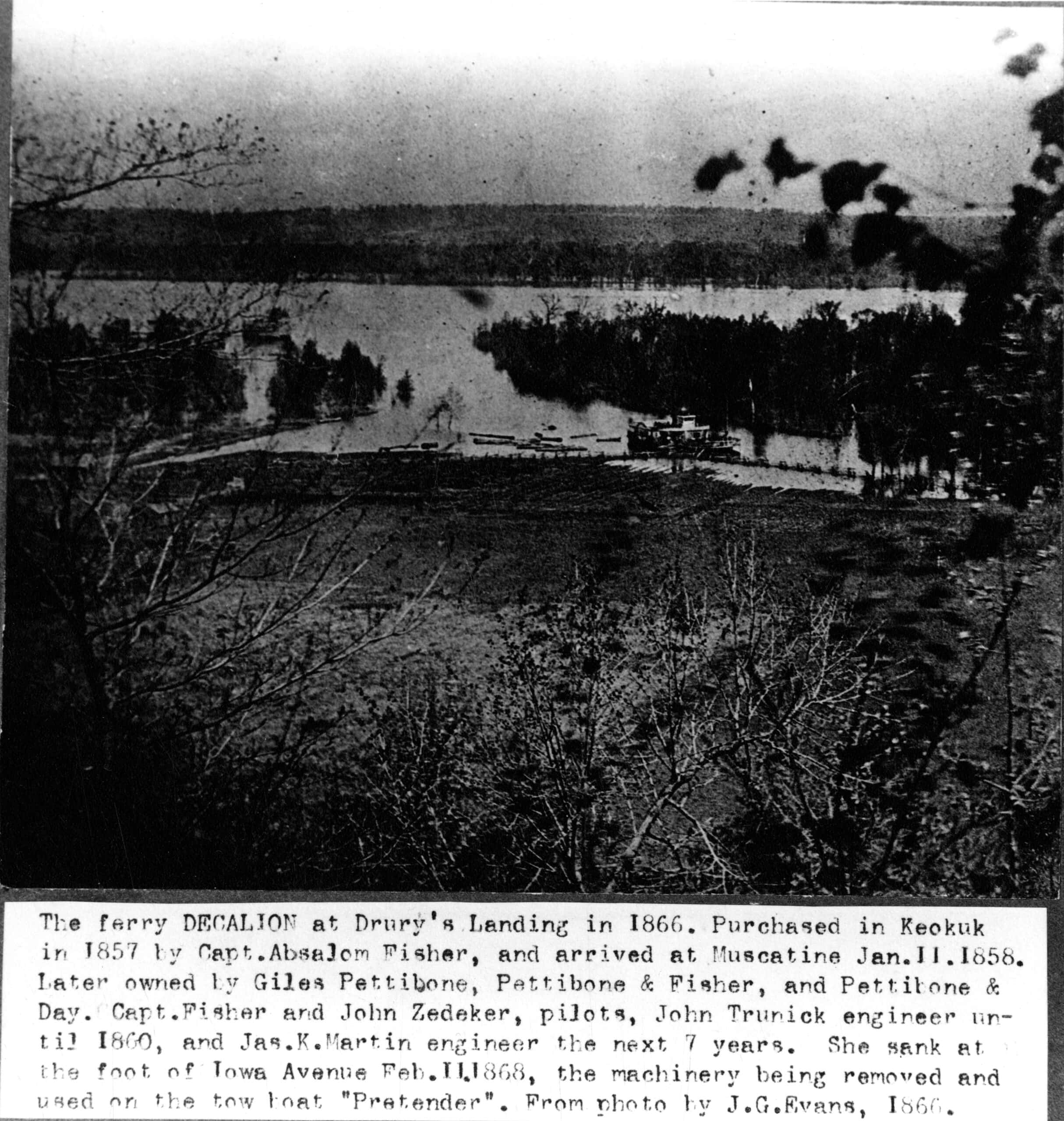
The ferry Decalion at Drury's Landing in 1866. Photo by J.G. Evans

Old frame building at Drury's Landing 1866. Photo by J.G. Evans

Second St. East of Iowa Avenue, 1866. Photo by J.G. Evans
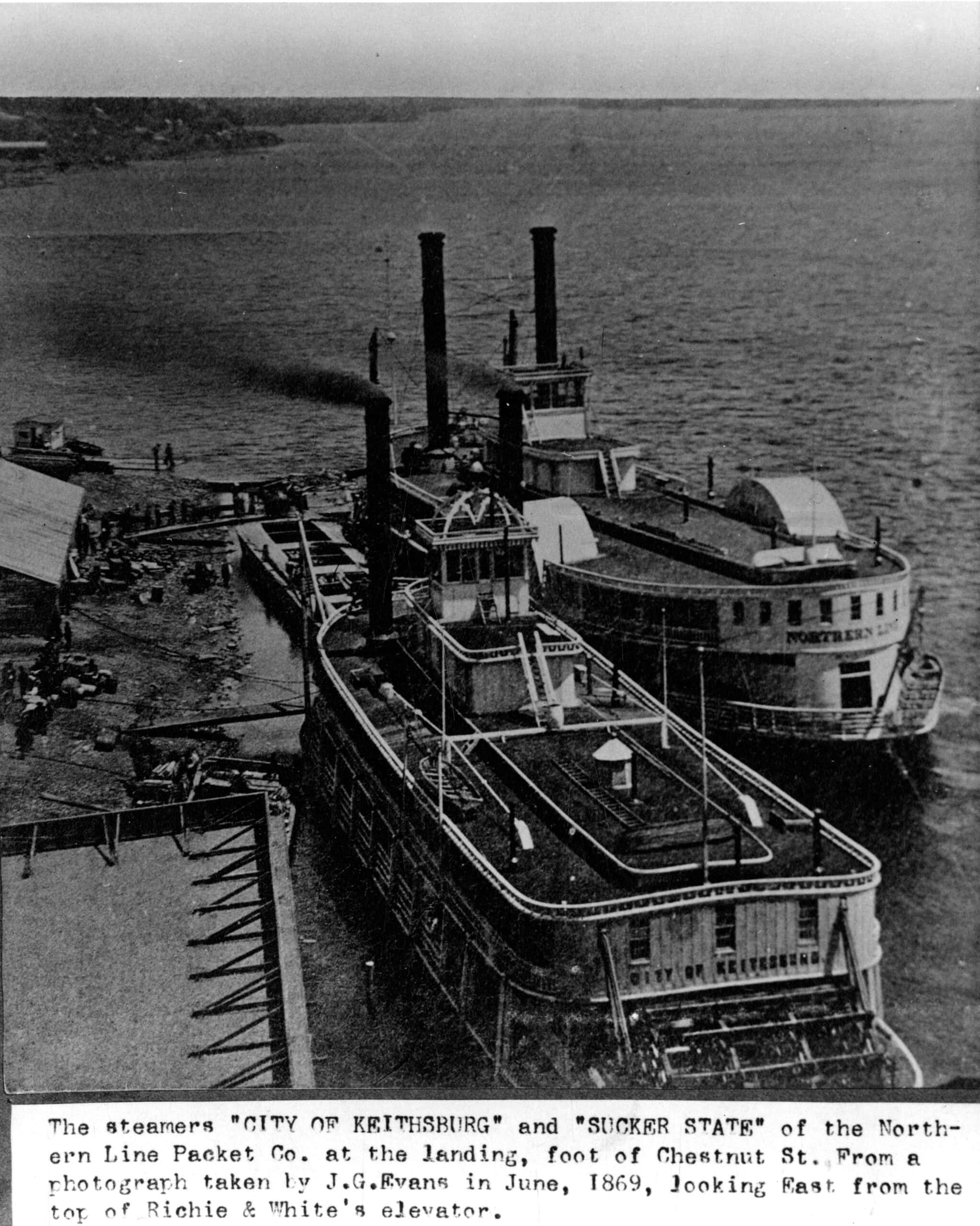
The steamers "City of Keithsburg" and "Sucker State" of the Northern Line Packet Co, 1869. Photo by J.G. Evans

Graham131 Chamber_s Mill203
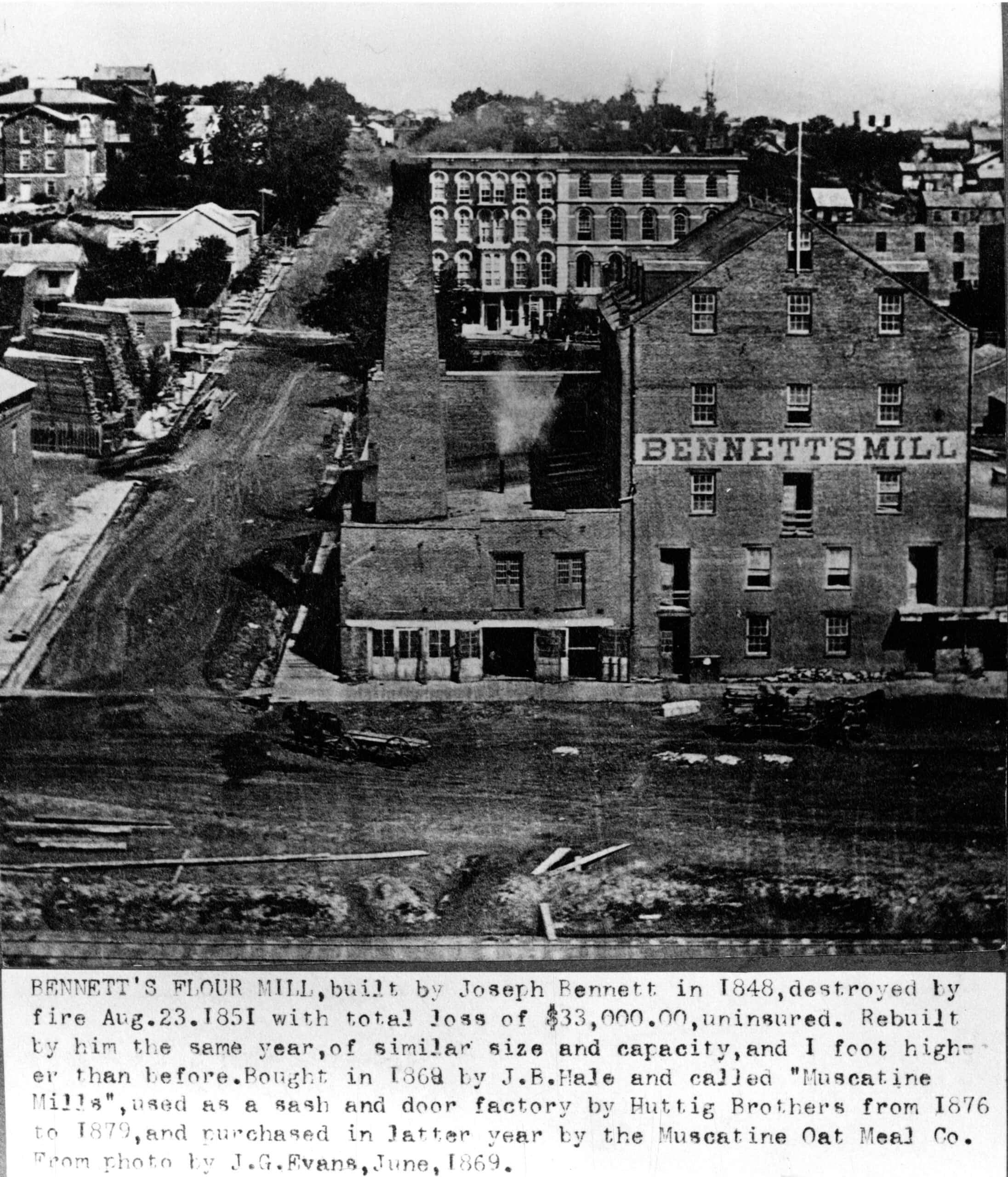
Graham132 Bennett_s flour mill204

Graham133 Marble works, Simpson205

Graham134 _Trident_206

Graham135 Ferry, _Northern Illinois_207

Graham136 Union Lumber Co208
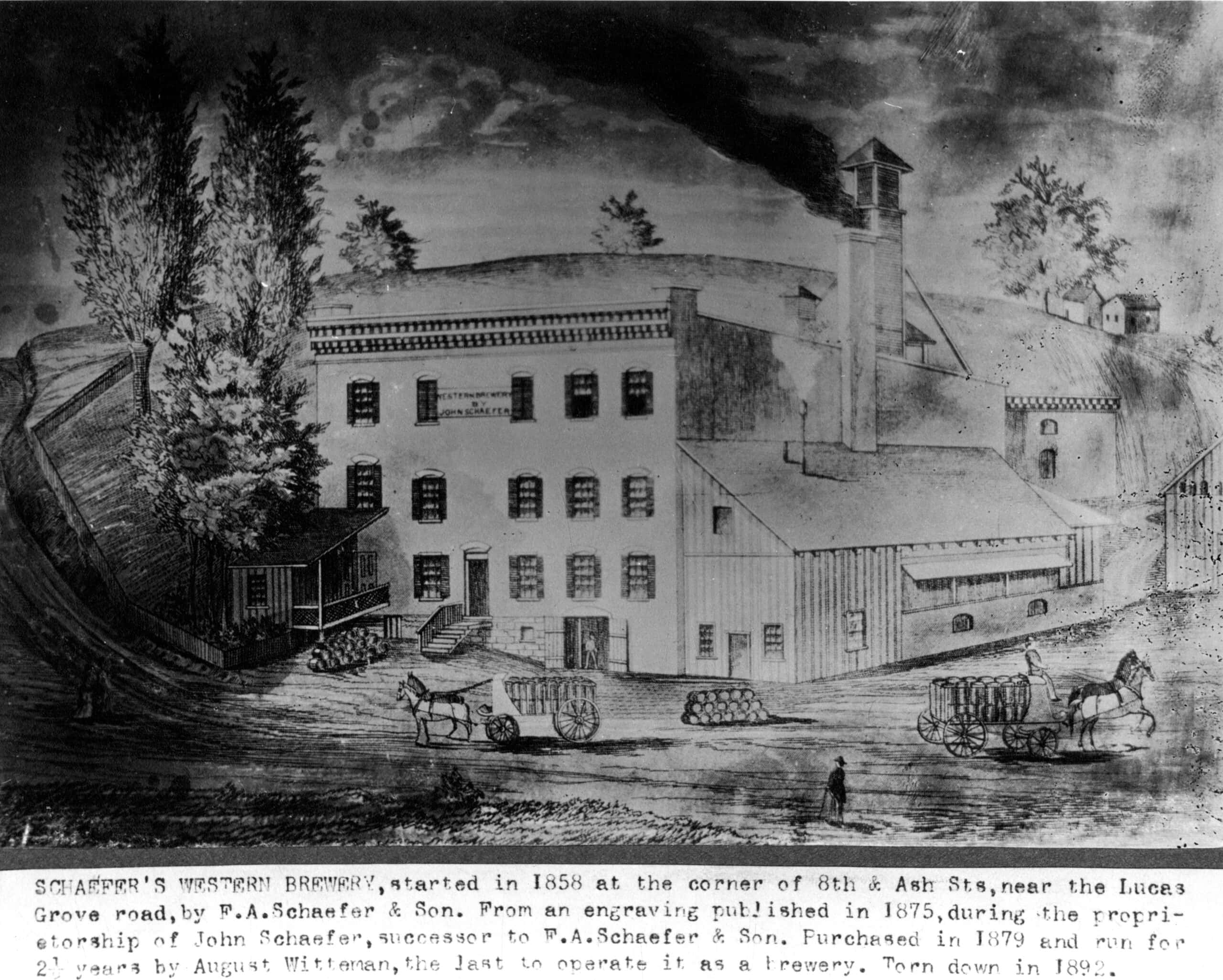
Graham138 Schaefer_s Western Brewery209

Graham139 Ogilvie House210
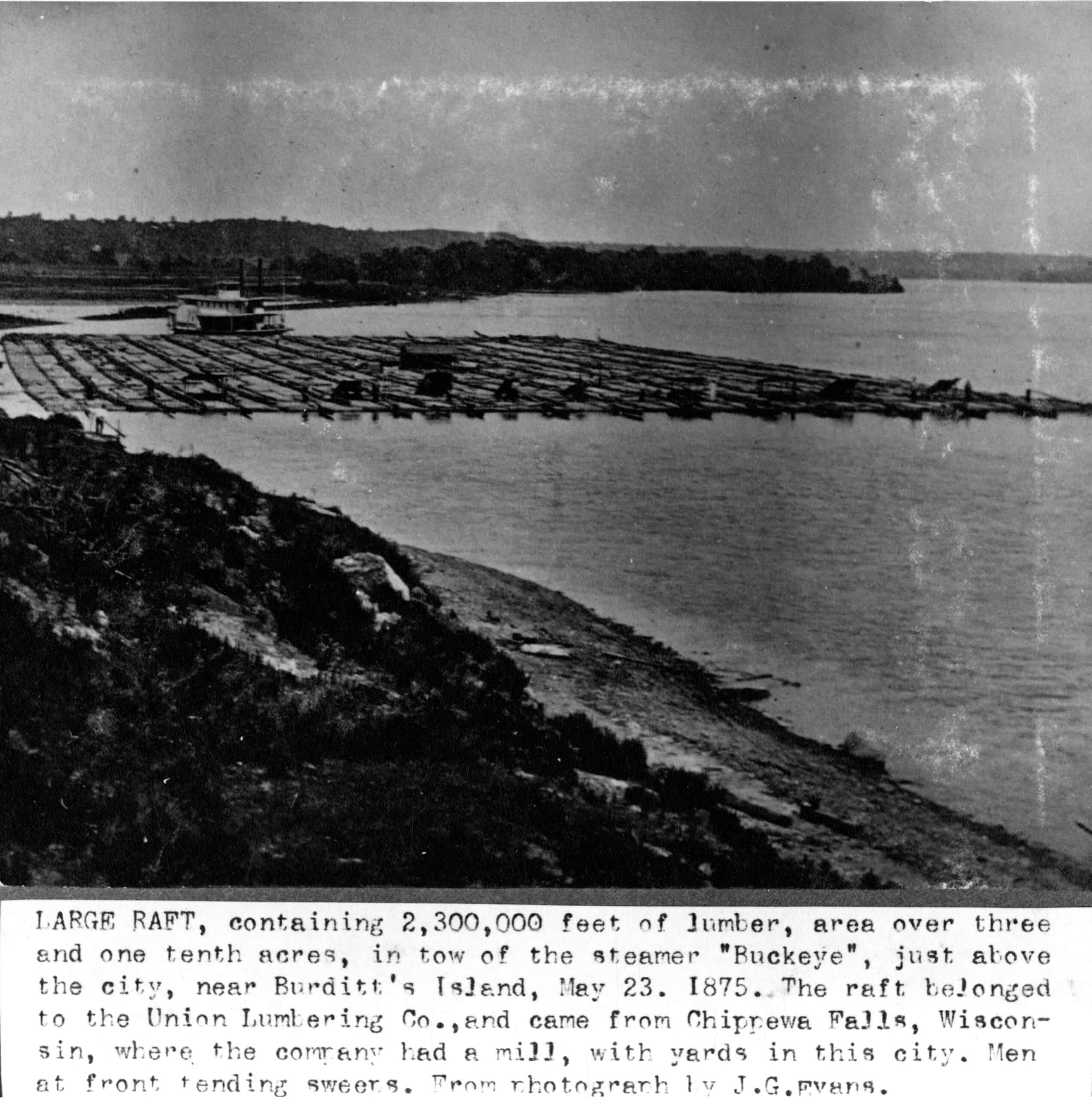
Graham140 Log Raft211
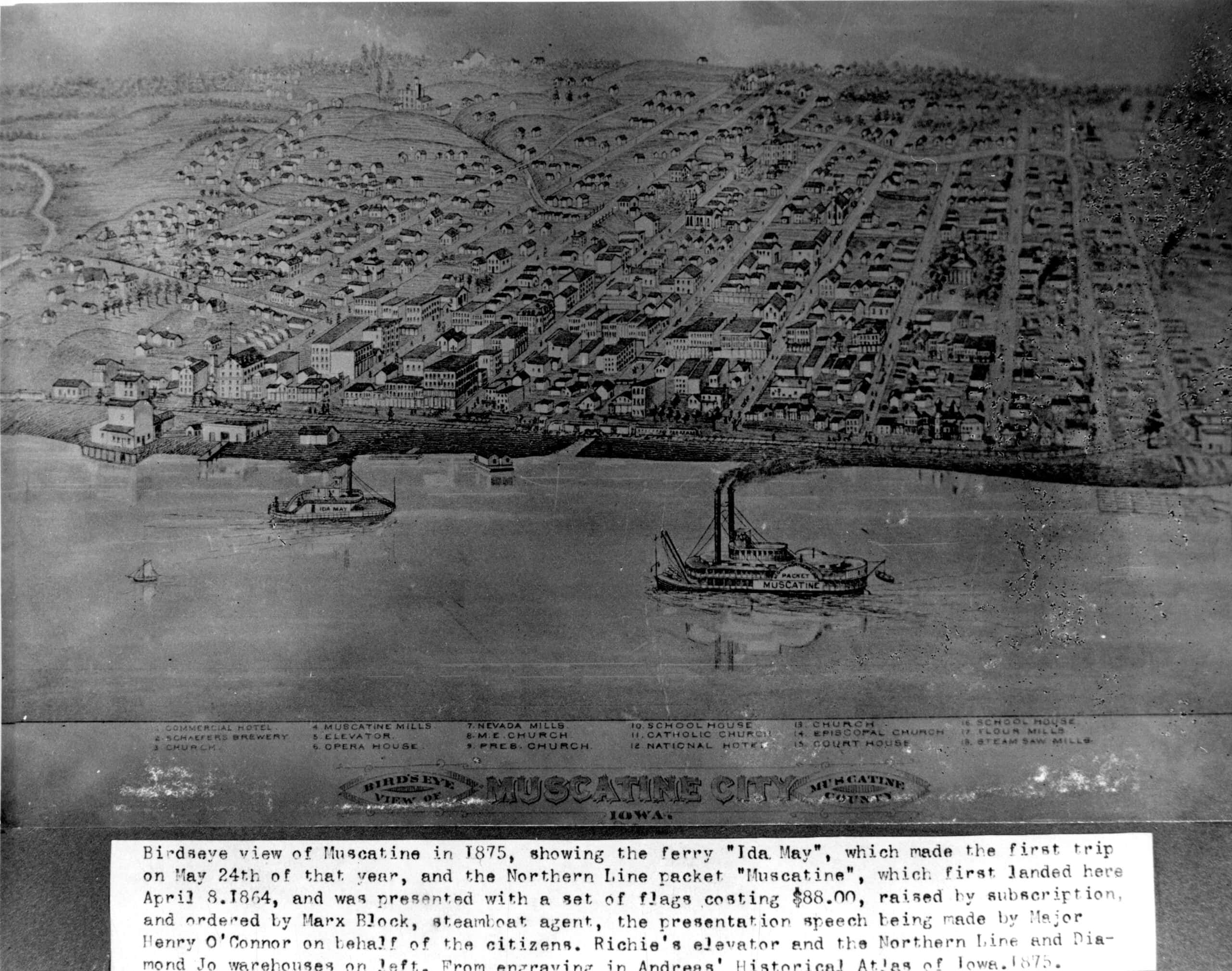
Graham141 Birds eye view, Muscatine212
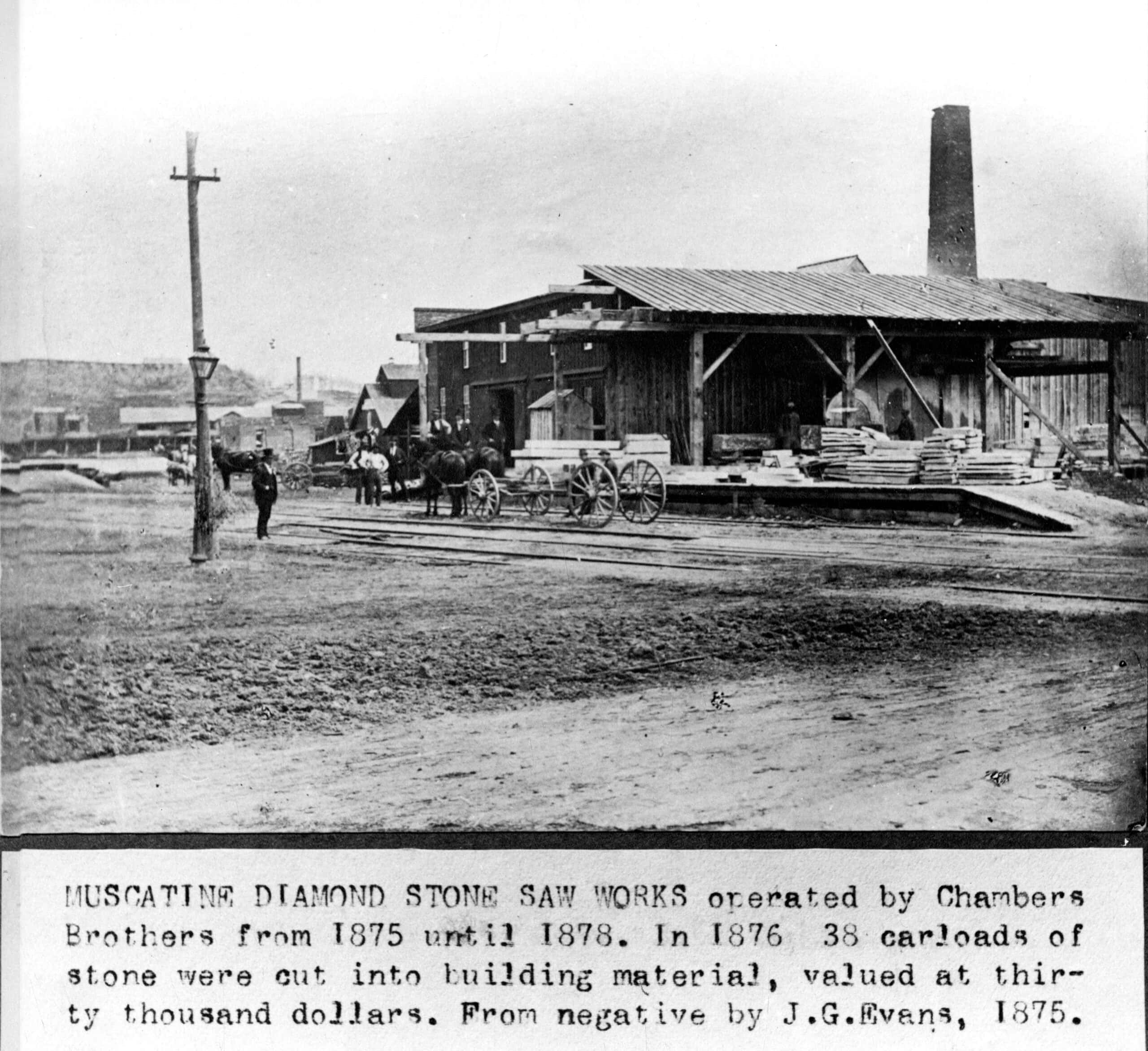
Graham142 Diamond Stone Saw works213
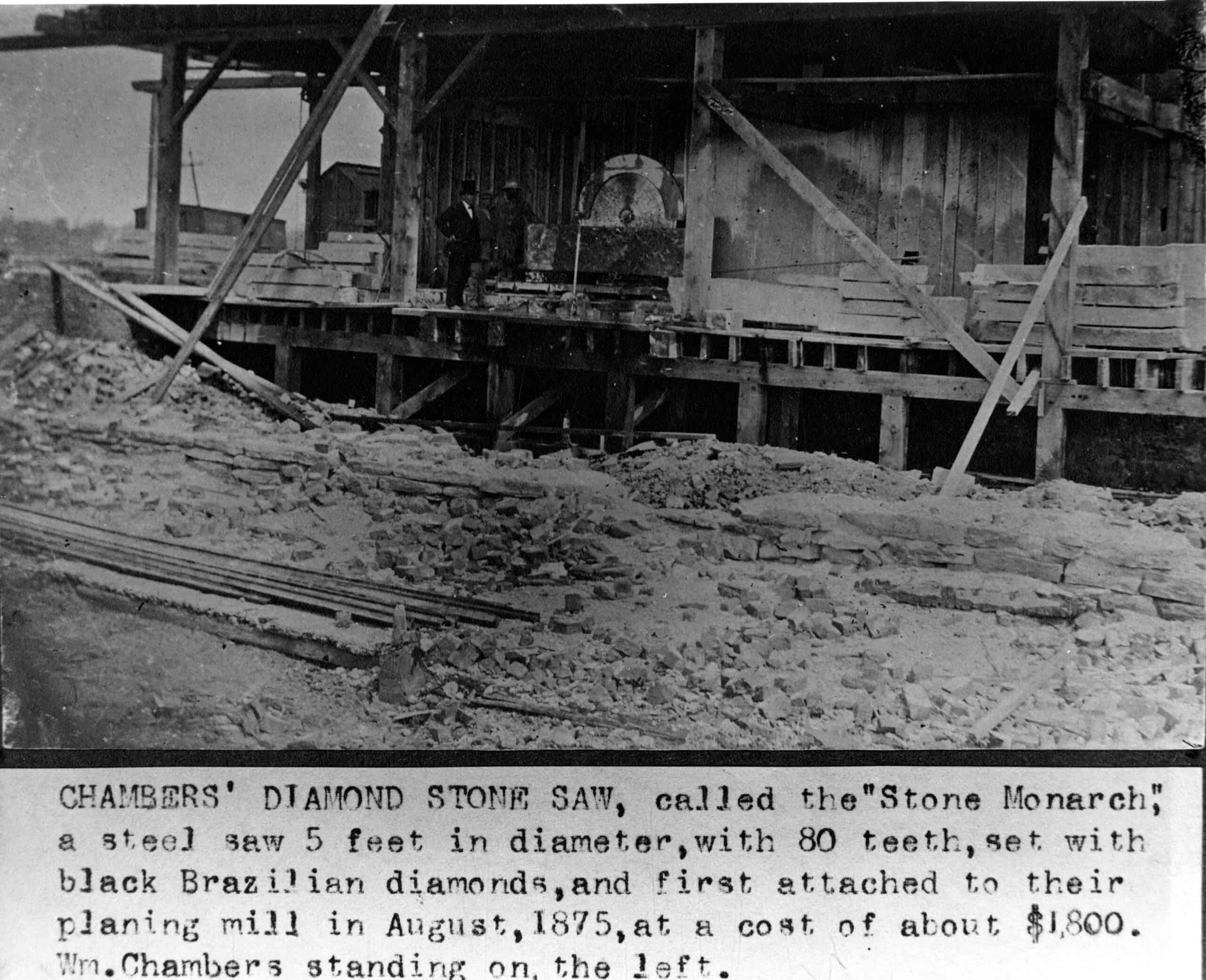
Graham143 Chambers_ Diamond Stone Saw214

Graham144 Old United Brethern Church215

Graham145 Congregational Chruch216

Graham147 View toward court house, jail217

Graham148 Young America flour mill218

Graham149 View toward 5th and Sycamore, East219

Graham150 View south from tower of old high school220
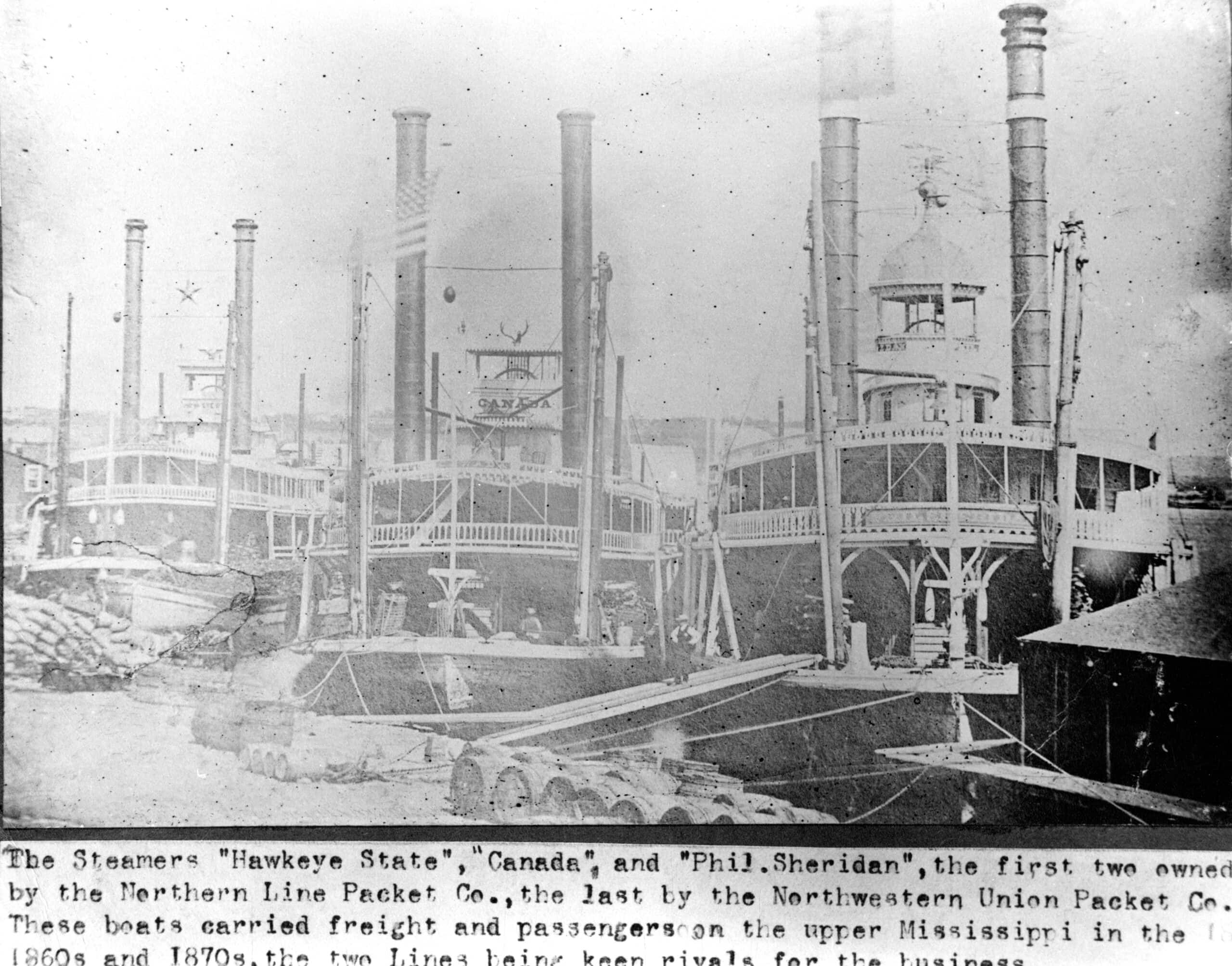
Graham154 Strs _Hawkeye State_, _Canada_, _Phil Sheridan_221

Graham156 Seiler_s pond 6th & Iowa222

Graham157 Snyder_s Livery Stable223
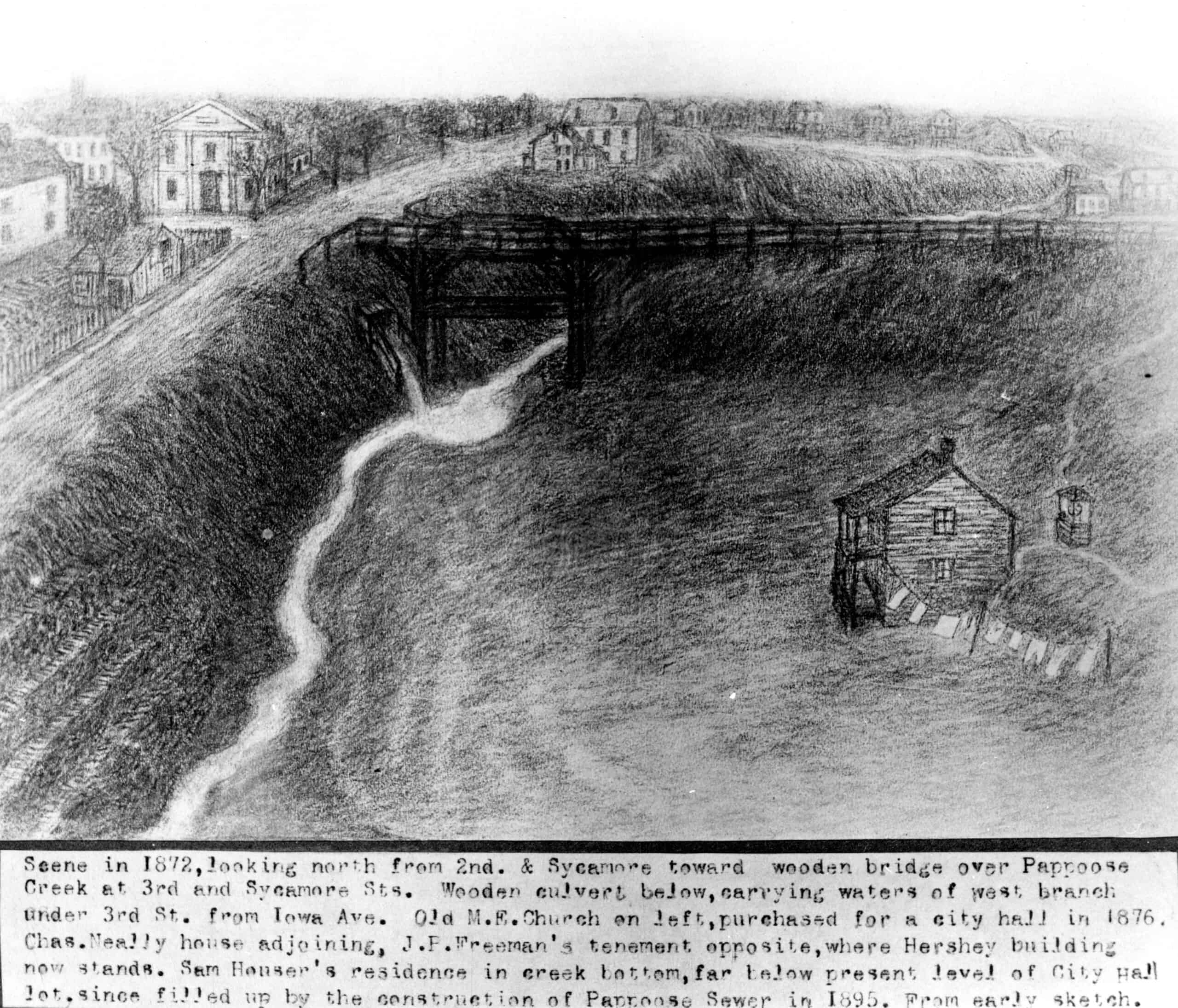
Graham158 Wooden Bridge over Paloose Creek, Cedar St 1872224

Graham159 Fire Dept, 1878225

Graham160 Arch, 2nd & Cedar226
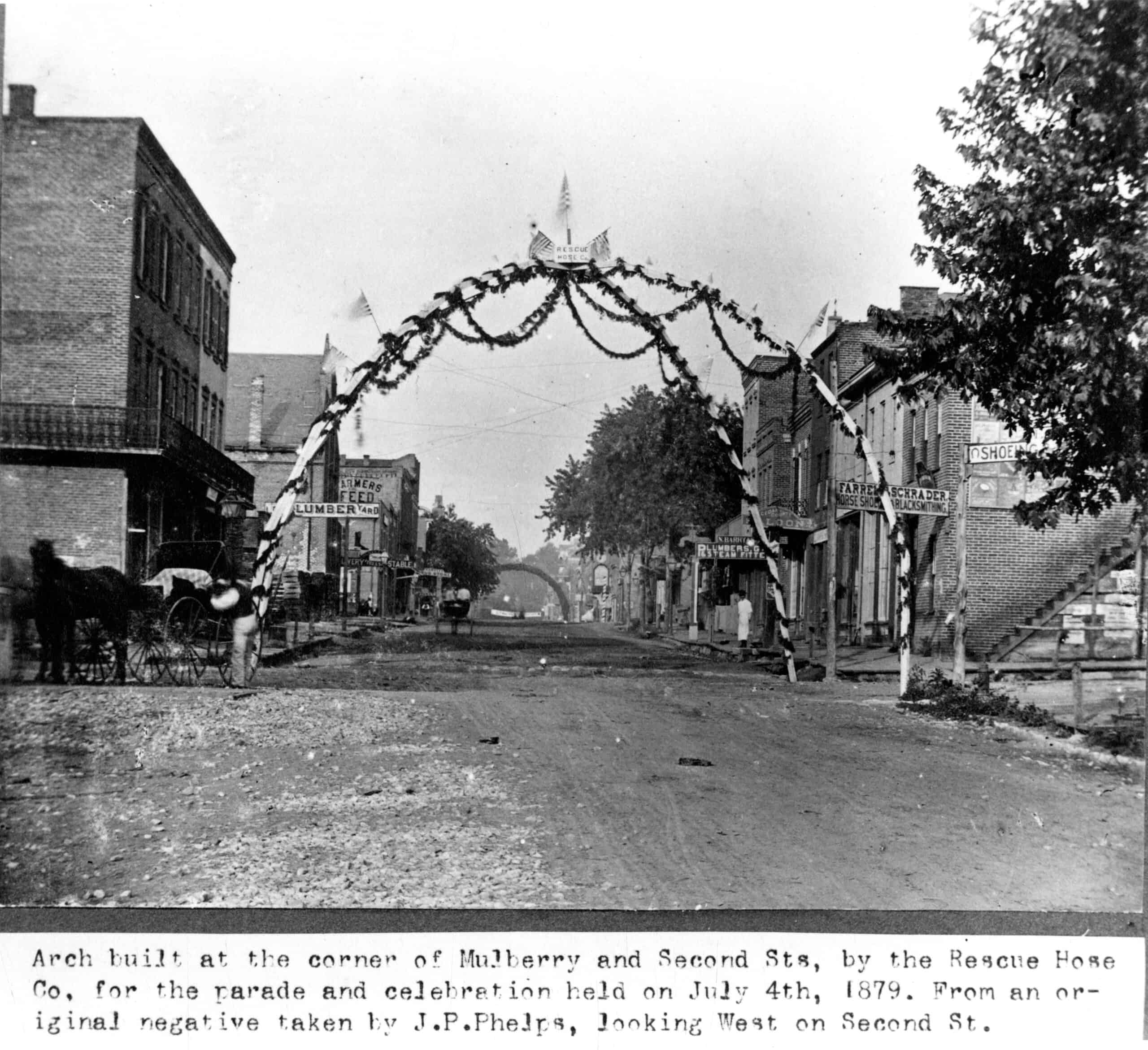
Graham161 Arch, Mulberry & 2nd227

Graham162 Arch, 2nd & Chestnut228
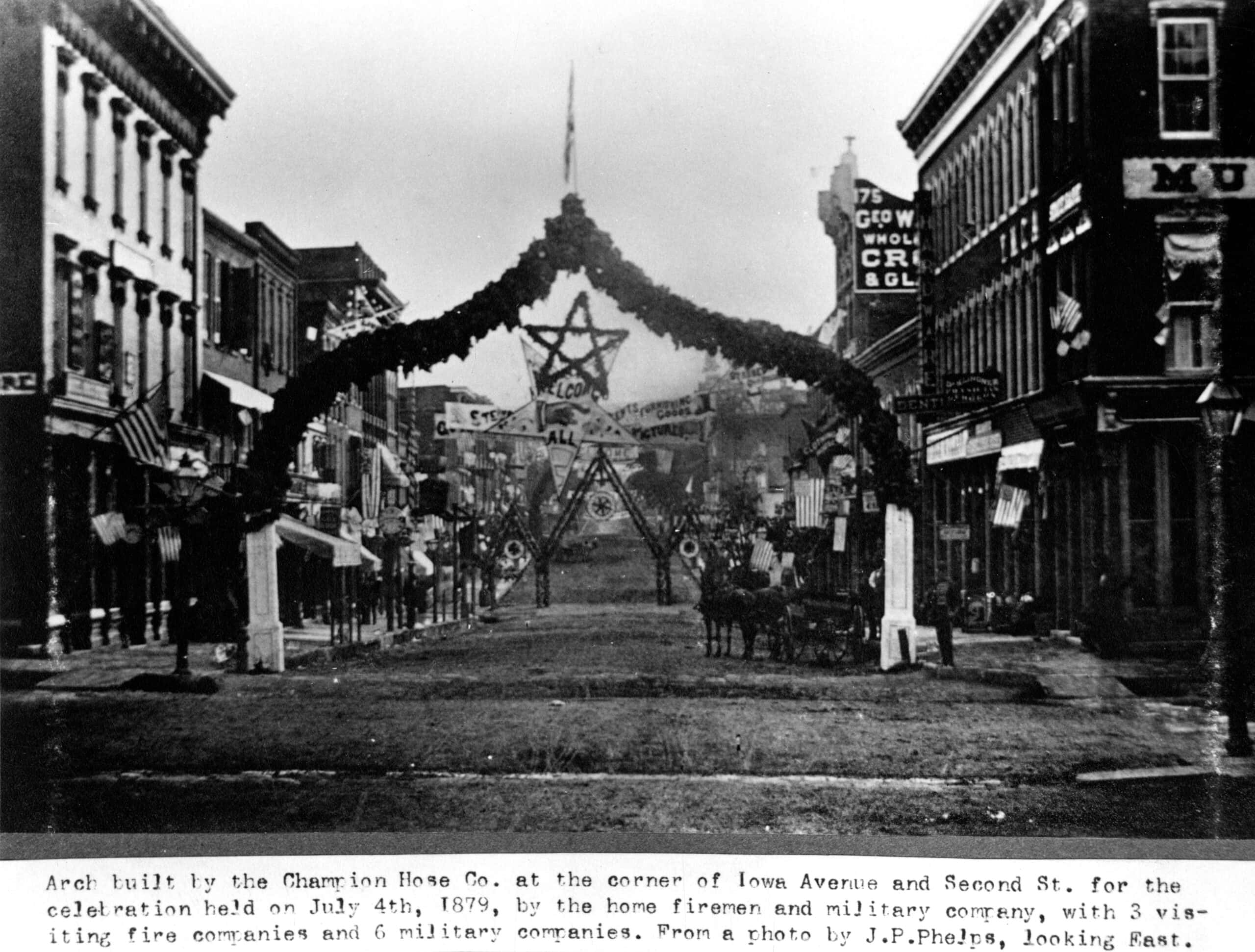
Graham163 Arch, 2nd & Iowa229
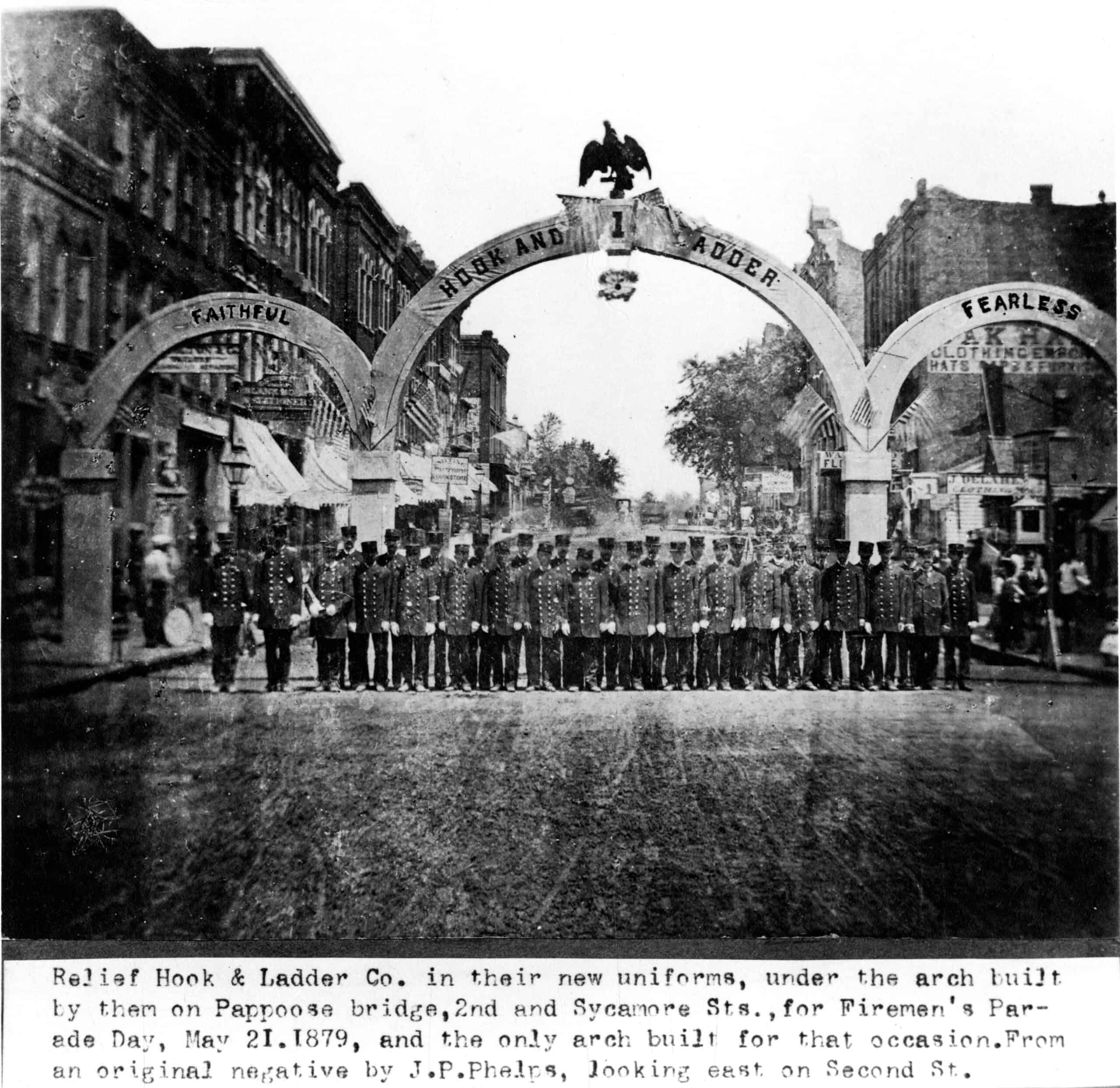
Graham164 Relief Hook & Ladder Co230
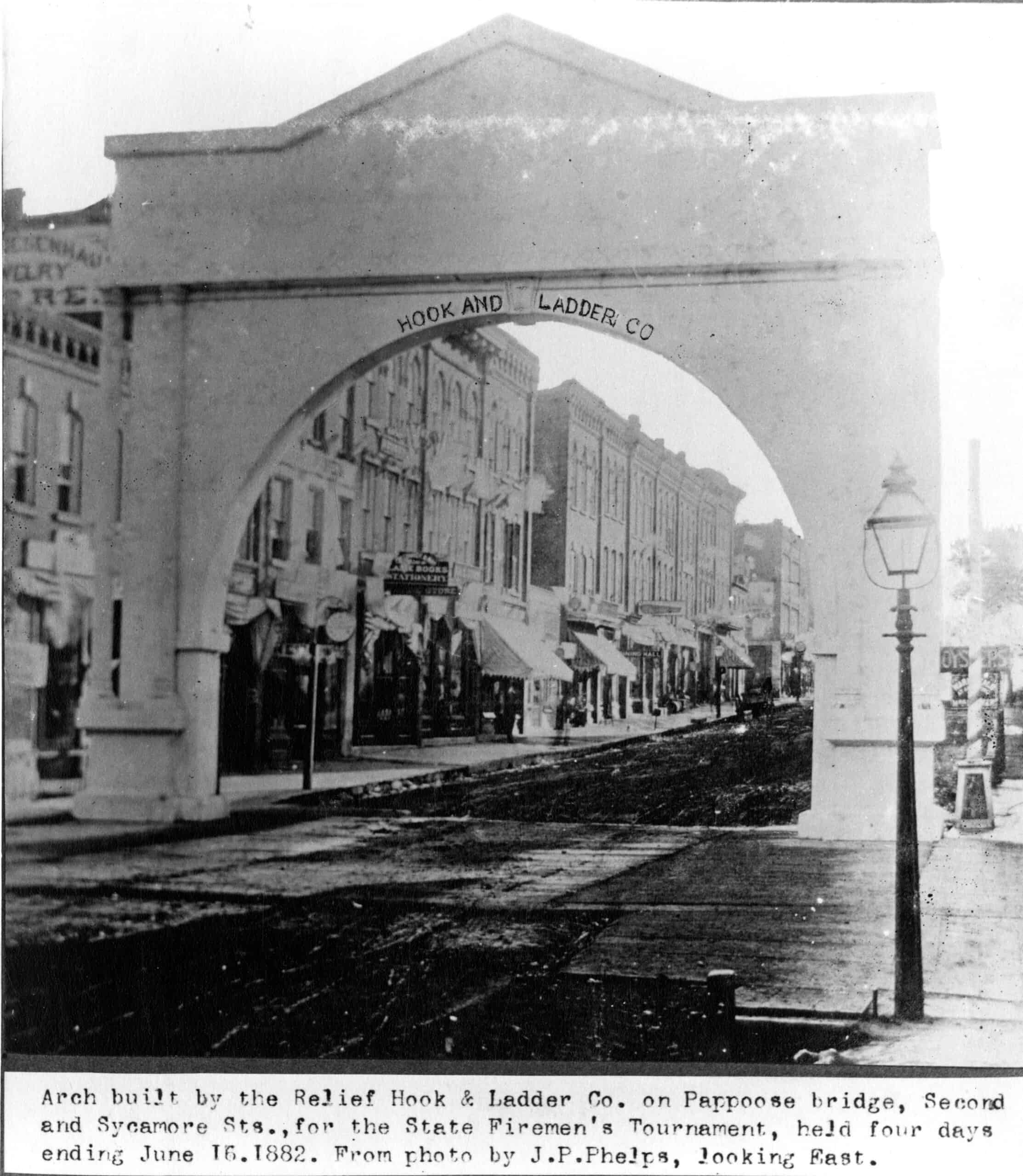
Graham165 Arch, 2nd & Sycamore231

Graham167 Arch, 2nd & Iowa232
Graham168 Arch 2nd & Chestnut233

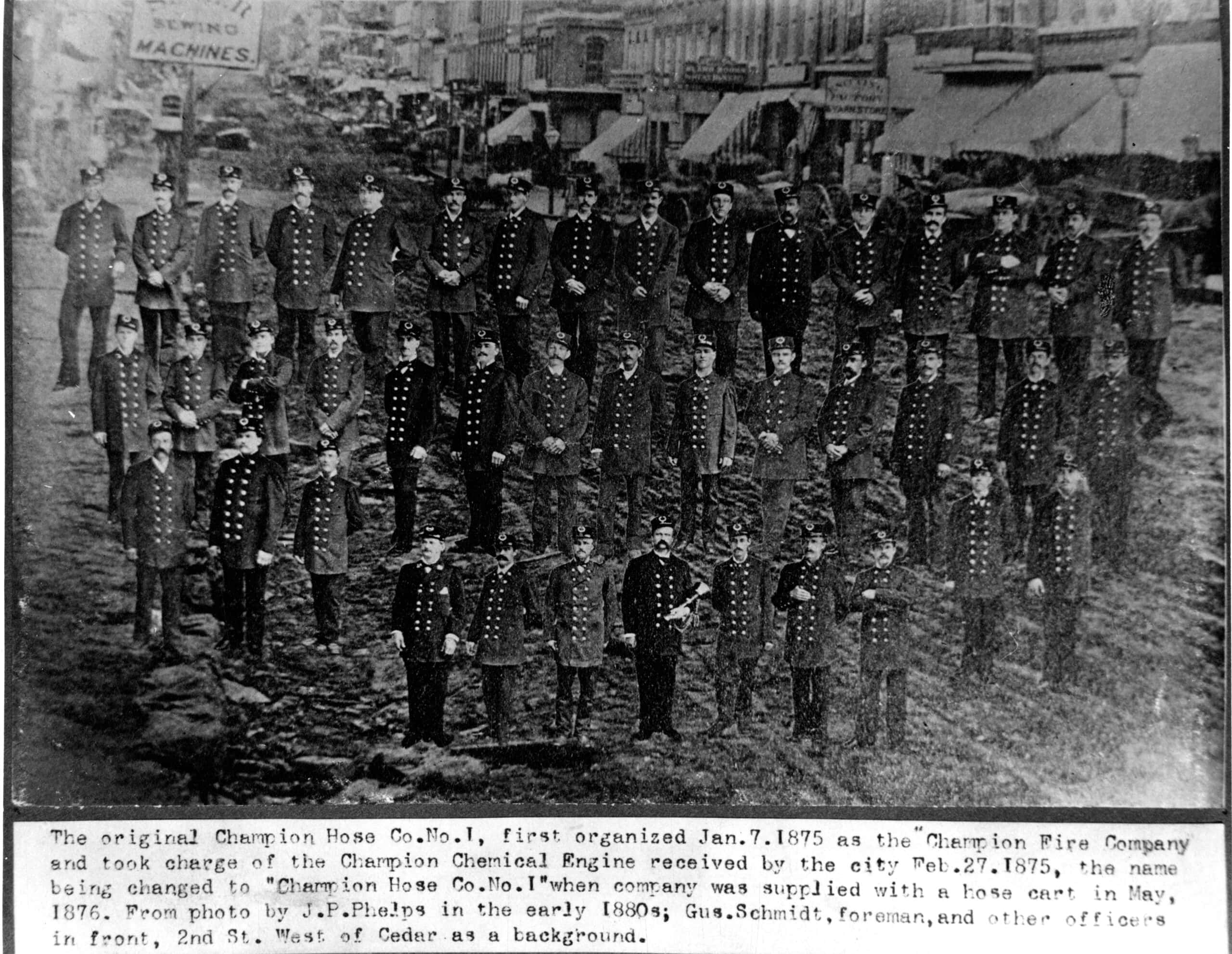
Graham169 Champion Hose Company234

Graham170 Arch, 2nd & Walnut235

Graham171 Arch, Iowa & Front236
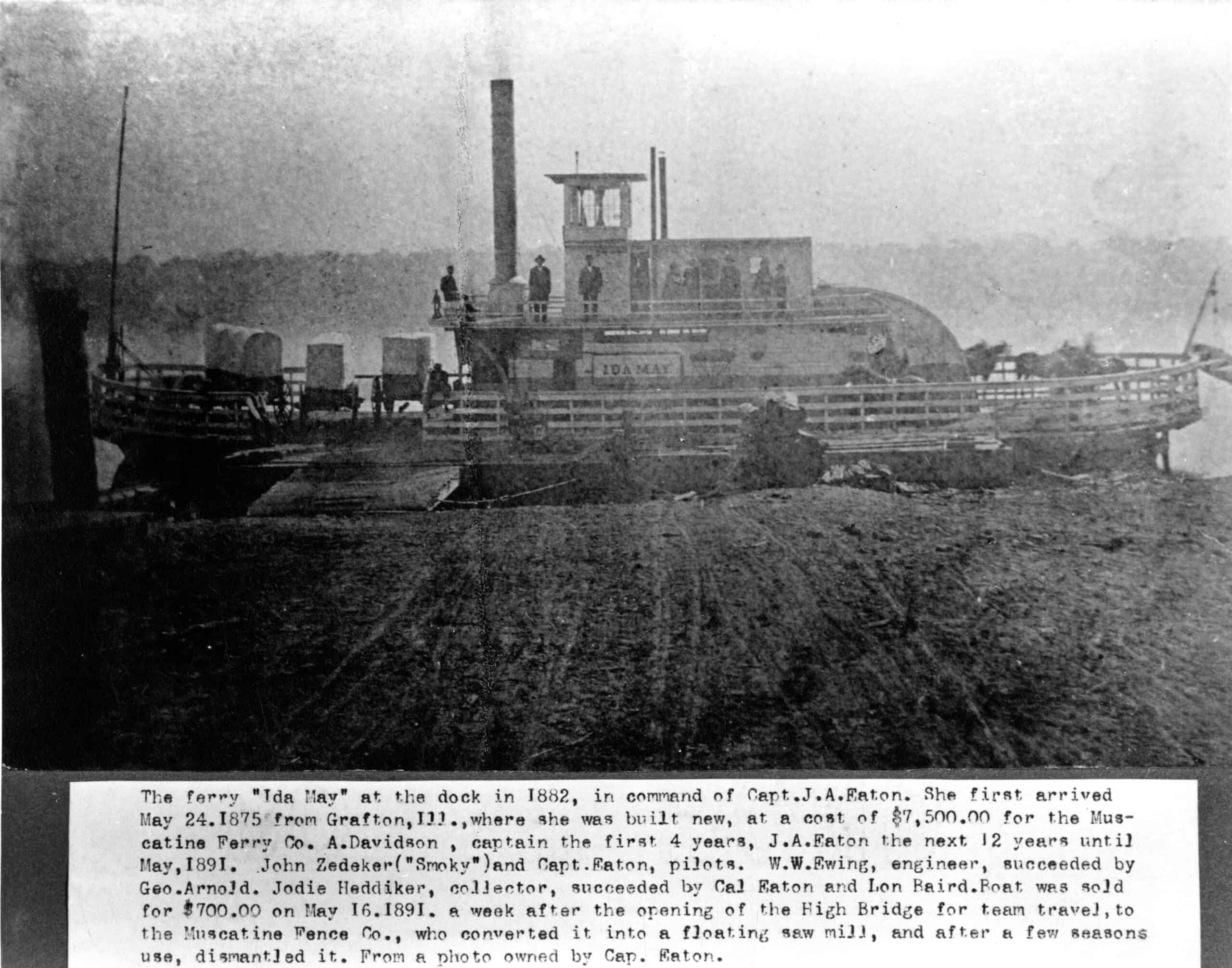
Graham172 Ferry _Ida May_237

Graham173 Ferry _Ida May_ landing passengers238
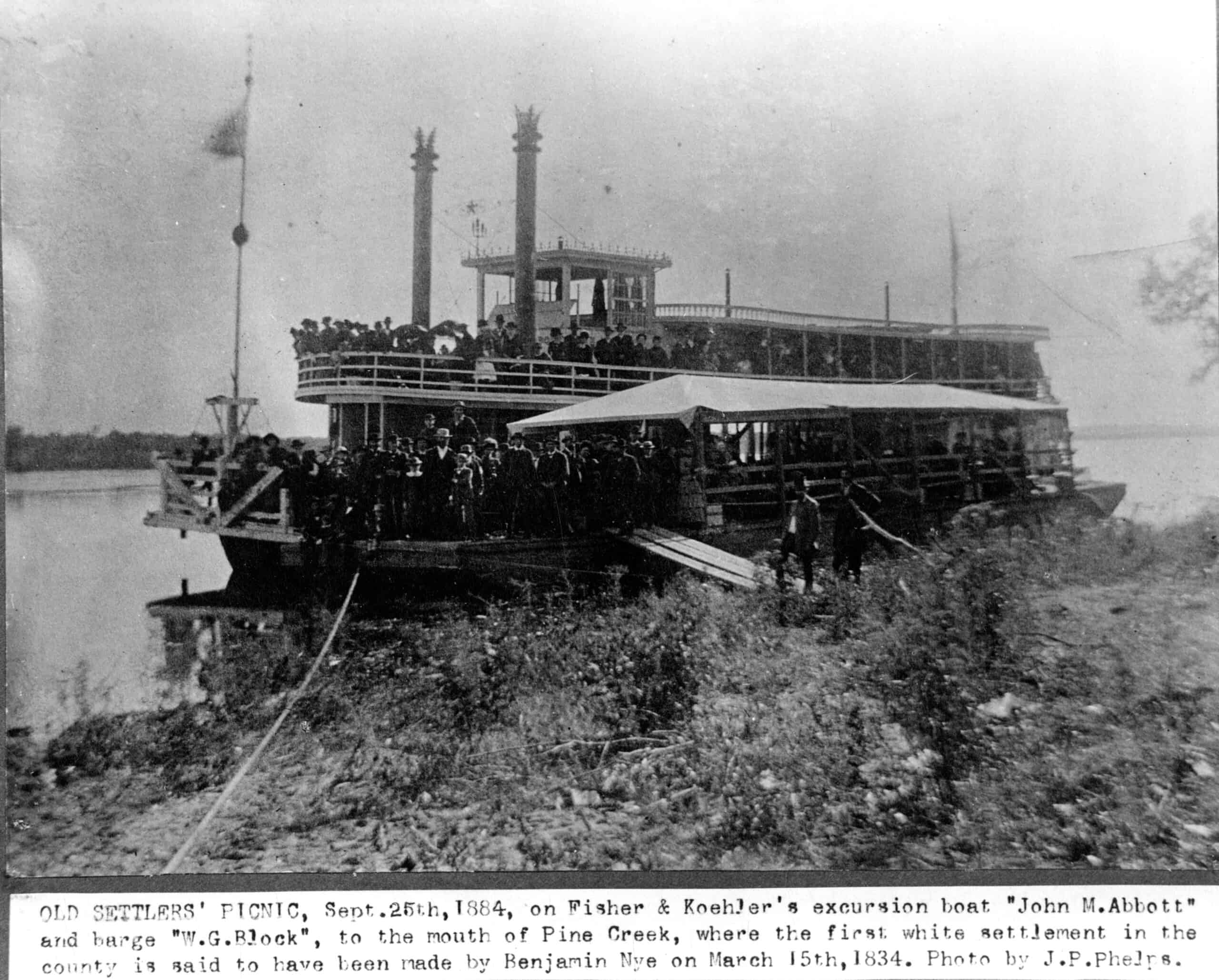
Graham174 Old Settlers_ Picnic boat239
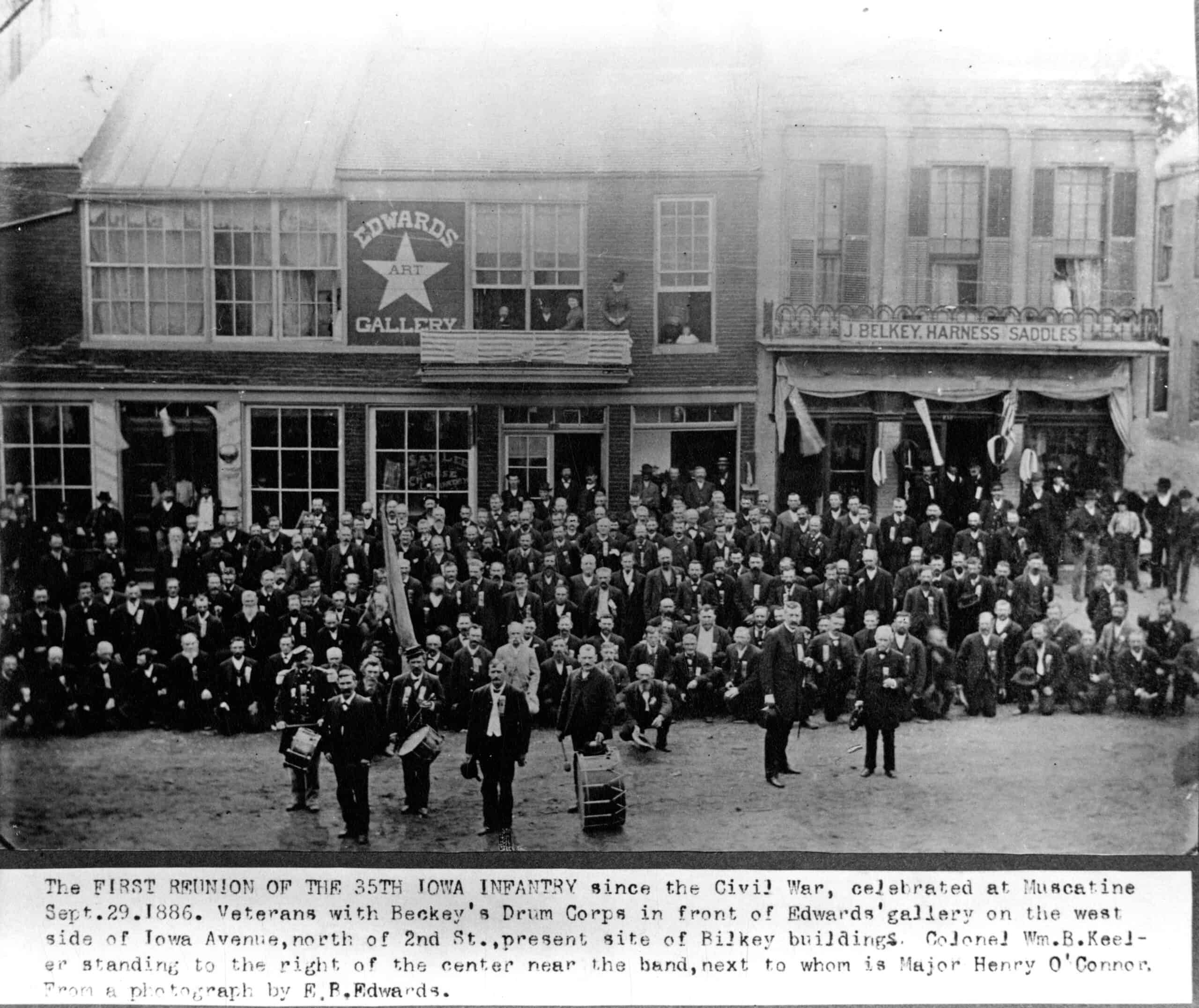
Graham175 First reuinion, 35th Iowa Inf, 1887240

Graham176 Reunion of the First Iowa Inf, 1887241

Graham177 View, 7th St, 1889242
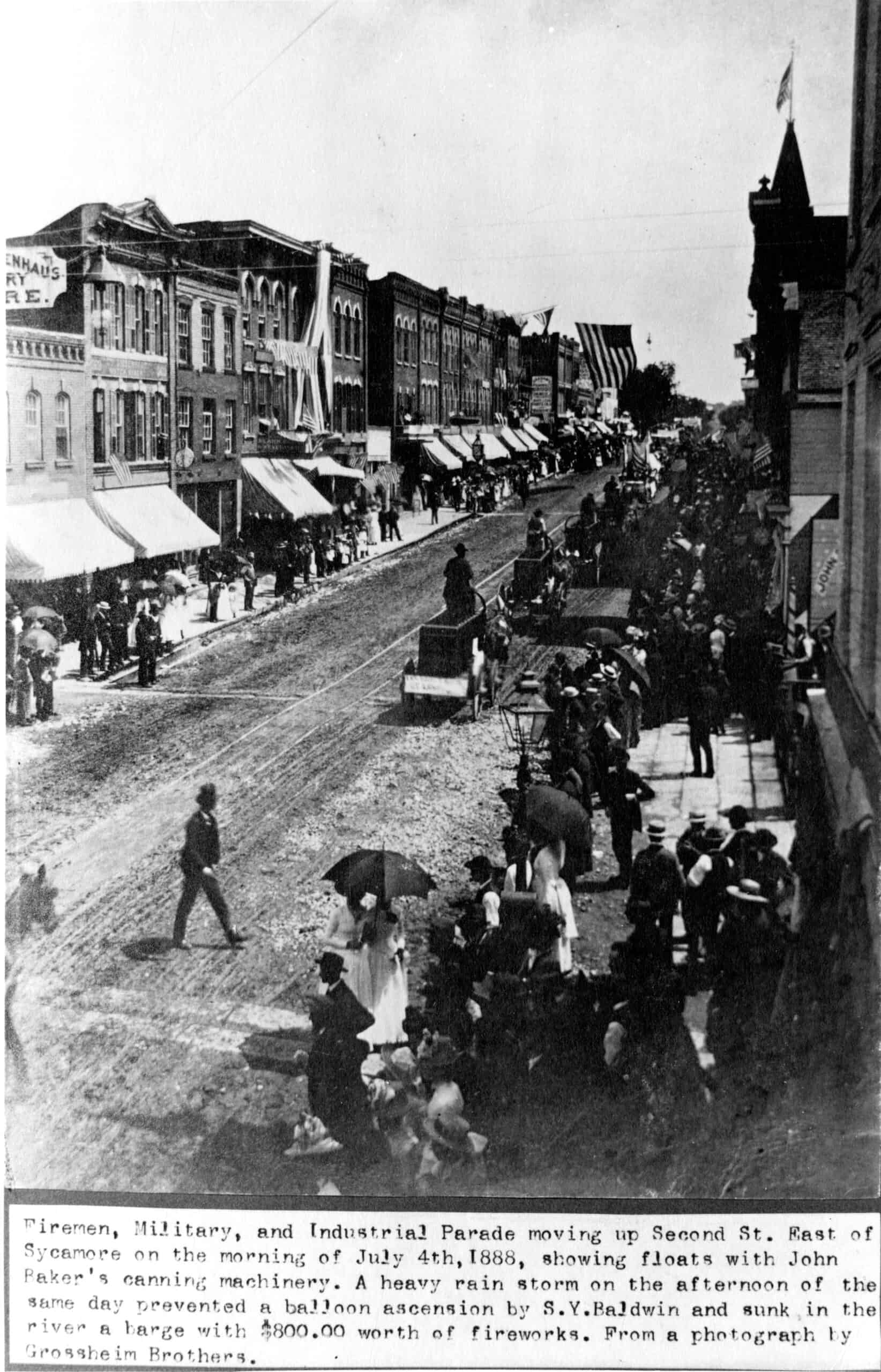
Graham178 Parade, 2nd St, 1888243
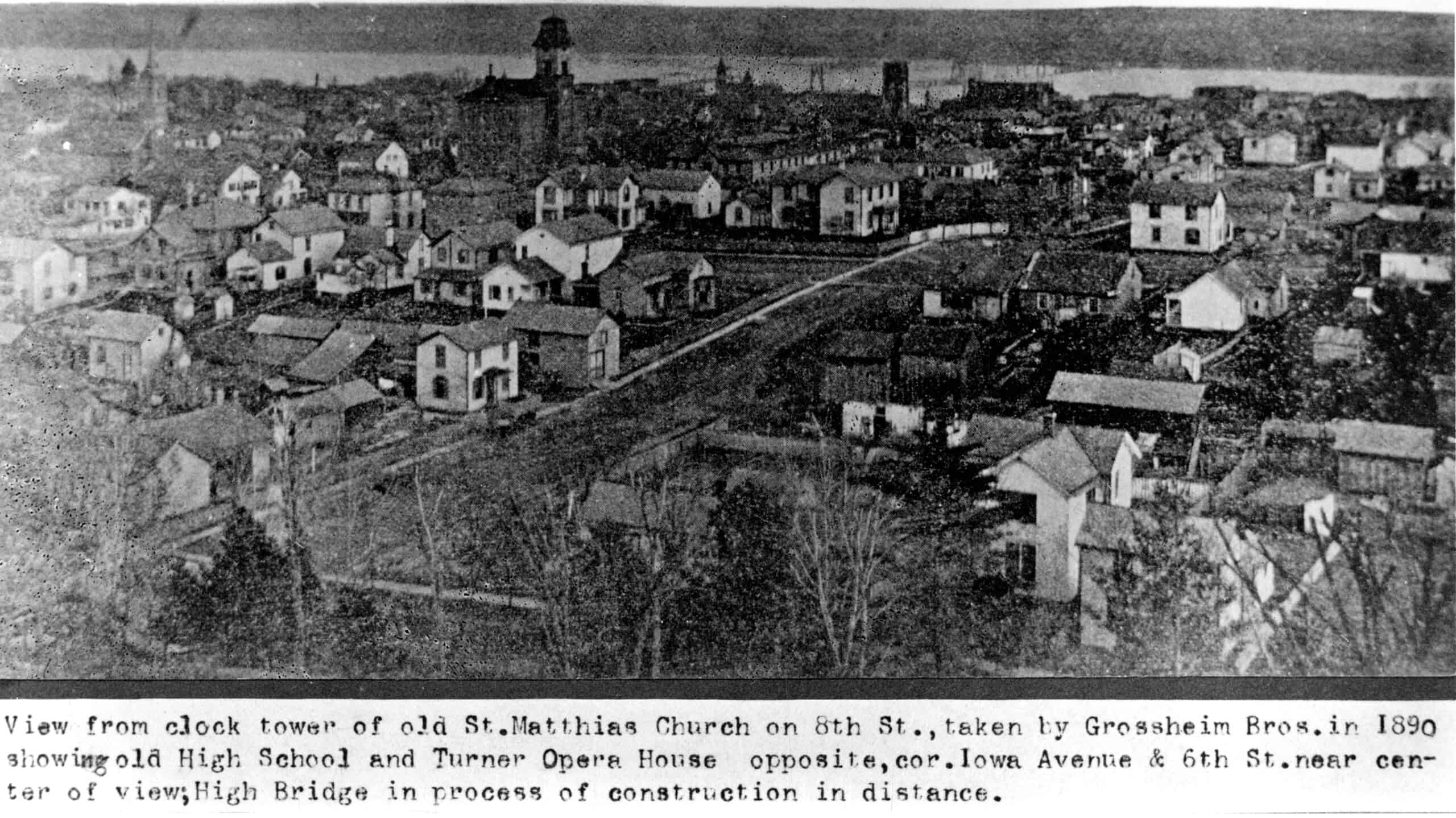
Graham179 View, down Iowa, Sixth, to river, 1890244